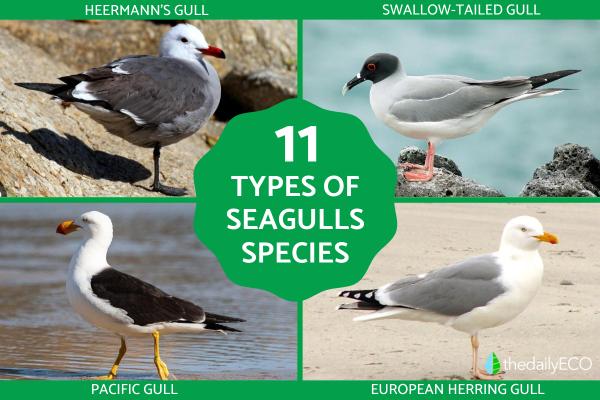
Gulls are some of the most common and recognizable birds in the world. They are found on every continent except Antarctica, and they occupy a wide range of habitats, including coasts, lakes, rivers, and even urban areas. There are over 50 different species of gulls worldwide, and they vary greatly in size, color, and behavior. Despite their diversity, all gulls have some things in common. They are all excellent flyers, and they all have a strong sense of smell. Gulls also have a unique call, which is often described as a "caw" or a "squawk."
If you are interested in learning more about gulls, continue reading the following article by thedailyECO. We will cover everything from the different types of gulls to their habitat and behavior.
How many different types of gulls are there?
Gulls are a diverse group of birds with over 50 to 60 different species found worldwide. They belong to the family Laridae, which also includes terns, skimmers, and auks. This diversity allows them to thrive in various environments and adapt to different ecological niches.
Gulls are medium-to-large sized birds with long wings, webbed feet, and hooked beaks. They are found in a variety of habitats, including coastal areas, lakes, rivers, and even urban environments. Their adaptability makes them one of the most versatile bird species.
Some gull species are highly specialized, while others are more generalists. For example, the Sabine's Gull has unique breeding and feeding behaviors, such as nesting in the Arctic tundra and foraging primarily on open water for small marine invertebrates. Other gull species like the Herring Gull are more generalists and have a broader diet and habitat range, making them adaptable to a wider range of environments and food sources. This adaptability often leads them to interact more with human populations.
Gulls play an important role in marine ecosystems. They help to control populations of fish, shellfish, and other marine organisms. Gulls are also scavengers, and they often feed on garbage and other human-generated waste. This scavenging behavior has made them an integral part of urban ecosystems, where they help in waste management.
Let's take a closer look at some of the most distinctive species of seagulls and their main characteristics. Understanding these differences can help in their conservation and management.
Heermann's gull (Larus heermanni)
Heermann's Gull, scientifically known as Larus heermanni, is named after the American ornithologist Adolphus Heermann, who first described it.
These gulls are primarily found along the western coast of North America, where they breed and nest. During the breeding season, they inhabit coastal areas of California and the Gulf of California in Mexico. However, Heermann's Gulls are known to be migratory birds, and they undertake extensive migrations, often as far south as Central America, during the non-breeding season. This migration pattern is crucial for their survival as it allows them to exploit different food resources throughout the year.
In their adult breeding plumage, they have gray feathers on their upperparts, complemented by a white head and underparts. Their legs are dark red, and they have a distinctive black-tipped bill. In contrast, during the non-breeding season, their plumage becomes more mottled, with a less-defined white head.
These gulls are highly adaptable and opportunistic feeders, with a diet that includes a variety of marine prey, such as fish, squid, and invertebrates. They are also known to scavenge for food, often frequenting coastal towns and fishing ports. This adaptability in diet is a key factor in their success as a species.

Swallow-tailed Gull (Creagrus furcatus)
The Swallow-tailed Gull, scientifically known as Creagrus furcatus, is the only fully nocturnal gull globally. These gulls feed primarily at night, using their excellent night vision to hunt squid and small fish. Their nocturnal habits help them avoid daytime predators, giving them an evolutionary advantage.
They are only found on the Galápagos Islands, a group of islands in the Pacific Ocean off the coast of South America. These islands are known for their unique plants and animals, making them a hotspot for biodiversity.
Swallow-tailed Gulls have white plumage, black wings and tail, and a distinctive red eye ring, giving them a unique appearance. Their striking appearance is not just for show but plays a role in their mating rituals and social interactions.
Swallow-tailed Gulls build their nests on rocky cliffs along the Galápagos Islands' shores. Both male and female birds help to incubate the eggs and raise the chicks. This shared parenting is essential for the survival of their young in such a challenging environment.
If you are interested in learning more about the amazing diversity of birds, we recommend checking out this article on how birds are classified.

Pacific Gull (Larus pacificus)
The Larus pacificus, commonly known as the Pacific Gull, is a species of seagull that inhabits the coastal regions of southern Australia. They prefer habitats such as sandy beaches, rocky shores, and estuaries, making them a common sight along Australia's extensive coastline.
Pacific Gulls are large birds with a wingspan that can reach up to 1.6 meters (5.2 feet). Their plumage is striking, with a white head, neck, and underparts contrasting sharply with their dark slate-gray wings and back. They have a distinctive yellow orbital ring around their eyes, which adds to their charismatic appearance.
These seagulls are opportunistic feeders and are known for their diverse diet. They forage for a wide range of prey, including fish, crustaceans, mollusks, small mammals, and even scavenging for scraps from human settlements. This ability to exploit various food sources allows them to thrive in different environments.
In addition to their feeding habits, Pacific Gulls play a significant role in their ecosystem by helping to control the populations of their prey, thus maintaining the ecological balance.

Herring Gull (Larus argentatus)
Larus argentatus, commonly known as the Herring Gull, is a versatile and adaptable seagull species. Herring Gulls are found across a vast range, including North America, Europe, and Asia. They inhabit coastal areas, estuaries, lakes, and even urban environments, making them one of the most widely distributed gull species.
These gulls are large with a wingspan that can exceed 1.5 meters (5 feet). They have a white head and body with gray wings marked by a prominent black wingtip. Their legs are pink, and they have a distinctive yellow bill with a red spot towards the tip.
These gulls are known for their intelligence and resourcefulness. They are excellent scavengers and are often seen near human settlements searching for food scraps. Herring Gulls are also highly vocal, with a variety of calls used for communication and establishing territory. Their ability to communicate effectively is essential for maintaining social structures within their colonies.

Bonaparte's Gull (Chroicocephalus philadelphia)
The Bonaparte's Gull, scientifically known as Chroicocephalus philadelphia, is a charming and petite seagull species. These gulls prefer the northern parts of North America, with their breeding grounds stretching from Alaska to eastern Canada. However, they're not homebodies, as they migrate south during winter, often reaching the Gulf of Mexico and the Caribbean.
Bonaparte's Gulls are among the smaller gull species. Their plumage is a mix of white and gray, featuring a distinctive black head during the breeding season.
Their diet mainly consists of aquatic insects, small fish, crustaceans, and the occasional tidbit from the surface. Bonaparte's Gulls are known for their graceful aerial foraging skills. They have a distinctive hunting technique, hovering above the water's surface before diving gracefully to catch prey. Their calls are gentle, quite distinct from the cacophony of larger gull species.
Interestingly, Bonaparte's Gulls have been observed to engage in cooperative foraging, where small groups work together to corral and capture prey, showcasing their social behavior and adaptability.

Ross's Gull (Rhodostethia rosea)
Ross's Gull, scientifically named Rhodostethia rosea, is a rare species of seagull. These gulls are native to the Arctic regions, particularly the northern parts of North America and Eurasia. While they breed in the Arctic, they migrate south during winter, venturing into areas like the northern United States and parts of Europe and Asia.
The Ross's Gull is a small and delicate seagull. Its distinctive features include a pale pink plumage, which intensifies during the breeding season. Its petite size and graceful appearance set it apart from its larger, more boisterous relatives.
These gulls primarily feed on small aquatic invertebrates, including crustaceans and insects. They are known for their buoyant and agile flight as they forage for food along coastlines and water bodies.
Ross's Gulls are known for their unique and charming courtship displays. They often engage in synchronized flights and vocalizations during mating rituals. They have a soft, melodious call, a contrast to the raucous cries of larger gulls.
Polar ecosystems are some of the most unique and important ecosystems on Earth. Learn more about them in this article.

Black-legged Kittiwake (Rissa tridactyla)
The Black-legged Kittiwake, scientifically named Rissa tridactyla, is a species of seagull predominantly found in the Northern Hemisphere, with significant populations in the North Atlantic and North Pacific.
Black-legged Kittiwakes are medium-sized gulls with striking black legs, hence their name. They have a pristine white body with elegant gray wings and a subtle yellow bill. Their slender build and agile flight make them well-suited for their coastal habitats.
These gulls have a varied diet that includes small fish, marine invertebrates, and zooplankton. They are well adapted to foraging at sea and are often seen plunging into the water to catch their prey.
Black-legged Kittiwakes are known for their melodious calls, resembling their name "kitti-wake." They are highly social birds, often seen in large colonies during the breeding season. They are known for their cliff-nesting colonies on coastal cliffs and islands. They build nests in unreachable places to protect their eggs and chicks from predators.
In addition to their diet, Kittiwakes play a role in nutrient cycling within their ecosystems by transferring nutrients from the ocean to the land through their droppings, which fertilize the coastal vegetation.

Sabine's Gull (Xema sabini)
Sabine's Gull, scientifically named Xema sabini, is a species of gull primarily found in the high Arctic during their breeding season. They nest on rocky cliffs and tundra habitats in the Arctic regions of North America, Europe, and Asia. However, they migrate long distances to spend the winter in pelagic marine environments.
These gulls have a black hood, a white face with a black eye patch, and a delicate, forked tail. During the breeding season, their plumage is adorned with shades of gray and elegant patterns.
Sabine's Gulls have a diverse diet, primarily consisting of small fish, insects, and marine invertebrates. They are skilled flyers and often perform aerial maneuvers to catch their prey.
They are social birds and often form flocks, especially during migration. Their nesting sites in remote Arctic regions provide some protection from predators.
If you are interested in learning more about the amazing diversity of waterbirds, we recommend checking out this article on types of flamingos.
Sabine's Gulls are also known for the long-distance migratory journeys they undertake, which are among the most extensive of any gull species, showcasing their endurance and adaptability to different environments.

White-eyed Gull (Larus leucophthalmus)
The White-eyed Gull, scientifically named Larus leucophthalmus, is a seabird native to the Red Sea and surrounding regions. They are strictly coastal, often found along the shores of the Red Sea and the Gulf of Aden.
They have a sleek, black body with a white head, a distinctive bright red ring around their eye, and a striking, long, and deeply forked tail. Their slender wings and graceful flight make them well-adapted for life at sea.
White-eyed Gulls are opportunistic feeders, and their diet primarily consists of fish, squid, and small marine organisms. They are known to exploit the rich marine resources of the Red Sea, which supports a diverse range of marine life.
Photo: birdforum, © by Reader, Marsa Alam, Egypt, April 2011
Interestingly, the White-eyed Gull's restricted distribution makes it vulnerable to environmental changes and human activities, emphasizing the importance of conservation efforts in their habitats.

Swallow-tailed Gull (Leucophaeus scoresbii)
Swallow-tailed Gull, scientifically known as Leucophaeus scoresbii, is a seabird that inhabits various coastal regions of South America, ranging from central Chile up to parts of Peru and Ecuador. They prefer the coastal habitats and islands along this stretch of the Pacific Ocean.
They exhibit a classic gull appearance with white plumage, gray wings, and a distinctive black cap on their heads. Their legs are a pale pink color, and they have a bright red-orange spot near their beaks, adding a splash of color to their elegant profile.
Swallow-tailed Gulls are opportunistic feeders, and their diet varies depending on the availability of prey. They predominantly feed on fish, squid, and various marine invertebrates. Their strong beaks and keen eyesight are well-suited for capturing prey both on the water's surface and in flight.
If you are interested in learning more about the amazing world of bird reproduction, we recommend checking out this article on how birds reproduce.
The adaptability of Swallow-tailed Gulls to different prey types ensures their survival despite changes in prey availability due to environmental or human-induced factors.

Great Black-backed Gull (Larus marinus)
The Great Black-backed Gull, scientifically known as Larus marinus, is an imposing seabird known for its large size and distinctive appearance.
These gulls are native to the coastal regions of the North Atlantic, including parts of North America and Europe. They are commonly found along the shorelines, cliffs, and islands of this vast geographic range.
The Great Black-backed Gull is one of the largest gull species globally, with a wingspan that can reach up to 165 cm (65 inches). Their appearance is distinct, characterized by black upperwings and mantle that sharply contrast with their white head, body, and underwings. They also sport a yellow bill and pink legs, which contribute to their unique look.
They primarily feed on fish, crustaceans, and other marine life. Their powerful bill allows them to prey on smaller birds, including other gull species and waterfowl, making them apex predators in their habitat.
They often steal food from other birds and are highly territorial during the breeding season. Their loud calls are a characteristic sound along the coastal areas where they reside.
In addition to their predatory habits, Great Black-backed Gulls play a role in controlling the populations of other seabirds and marine animals, which helps maintain the ecological balance in their habitats.

If you want to read similar articles to Are There Different Kinds of Seagulls?, we recommend you visit our Wild animals category.
- Beatty, R., Beer, A., & Deeming, C. (2010). The book of nature. Great Britain: Dorling Kindersley.