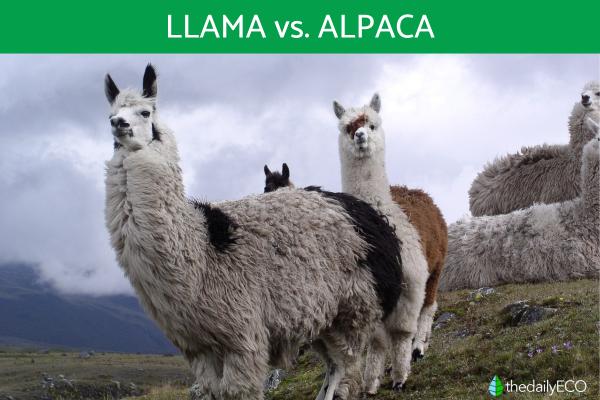
The llama and alpaca are two of the most iconic animals from South America. We see their representations in indigenous crafts, official tourism promotion and various other images associated with the Andean region. Whether looking at a representation or a live animal, it can be difficult to distinguish between these two types of camelid. If we compare them to the camel, perhaps the most famous camelid, we can see many great differences. For those familiar with these species, there are some obvious differences. For the rest of us, it can be helpful to make a llama vs. alpaca comparison.
To make such a comparison, thedailyECO explains the similarities and differences between llamas and alpacas. We look at the physical, behavioral and any other important differences we might find.
Taxonomic differences between llamas vs. alpacas
As stated in the introduction, both the llama and the alpaca are considered camelids. These are members of the biological family known as Camelidae. There are two extant genera of camelid:
- Camelus
- Lama
These animals are even-toed ungulates, referring to the placement of their toes during locomotion. They share certain characteristics, including a herbivorous diet and shaggy fur. Animals of the genus Camelus include the Bactrian camel and dromedary. They live in Africa and parts of Asia.
Animals of the genus Lama claim South America as their natural habitat, although they have been imported to be used as domestic animals in various parts of the world. These animals include the following:
- Llama (Lama glama)
- Alpaca (Lama pacos)
- Guanaco (Lama guanicoe)
- Vicuña (Lama vicugna)
Llamas and alpacas share the key similarity that they are both domesticated animal species. In fact, the llama is considered a domesticated guanaco and the alpaca is thought to be a domesticated vicuña. Despite these relationships between species, they all have certain characteristic differences, especially in terms of appearance. We will look at these differences in the section below.
Taxonomic differences between llamas vs. alpacas
Now we know how llamas and alpacas are grouped differently, we can see how they differ in terms of appearance:
Size
Perhaps the most marked difference between llamas and alpacas is their size, at least with adult specimens. The llama is significantly larger than the alpaca. While the alpaca averages around 3 feet (90 cm) at the withers, the llama averages about 4 feet (120 cm). They are much taller than this when you factor in their long necks, although the neck of a llama is still longer than that of an alpaca.
In addition, llamas are also heavier than alpacas. Alpacas rarely exceed 130 lb (60 kg), while an adult llama can reach as much as 330 lb (150 kg). In captivity, some llamas have been known to reach as much as 600 lb (272 kg). When we take these dimensions into account, we can see that the llama is a more physically imposing animal than the alpaca.
Body
The legs of the alpaca are shorter due to their shorter height, but their neck is also relatively shorter. In addition, alpacas have a more rounded and compact body, while llamas are more elongated. The difference in physical power between the two animals is very easy to see.
Nose and ears
Alpacas have a much shorter snout than those of llamas, the latter being more pronounced and fine. Similarly, the ears of alpacas are more rounded, while those of llamas are longer. Although longer, llama ears are slightly curved inward, giving them a characteristic banana shape.
Fur of the llama and alpaca
Both species produce a large amount of wool, but of a type that is easy to distinguish. Alpaca wool is light and fluffy, leading it to be considered of great commercial value. The wool of llamas is rougher and coarser, less soft to both the eye and to the touch. When it is processed, llama wool is still soft, but it is considered less desirable than alpaca wool by many.
Alpacas are often sheared once a year, producing a considerable amount of fiber that is highly prized in the textile industry. The unique crimp and smoothness of alpaca wool provide warmth and comfort, making it a favorite among designers and crafters. Llamas, on the other hand, are typically sheared less frequently due to the coarser nature of their wool.

Behavioral difference between llamas vs. alpacas
Both llamas and alpacas share many similarities in terms of behavior. As with all camelids, they are both herbivorous animals and they graze on pastures for most of the day. However, their group dynamics are usually a little different.
Alpacas are herd animals and have quite a strict social order with one alpha male being joined by many females and their young. Although herbivorous, they can be very defensive when they believe they are being threatened. This includes kicking, spitting and even headbutting if they can reach. Although they may not feel threatened, alpacas are generally more timid and will likely shy away from strangers.
Llamas can also be very friendly, but only when properly socialized. Although also a herd animal, llamas tend to be a little more independent. They also have a tight social hierarchy, which means they can be quite rough with other members of the group. If a llama becomes overly socialized with humans, it can lead to them treating them as if they were a part of the herd. This can include asserting dominance and even result in attacks.
Generally speaking, llamas are more stubborn and extroverted than alpacas. The social order of a herd of llamas can also change easily, so one llama may behave differently on any given day. However, when properly socialized, llamas will rarely spit at or kick a human, unless provoked into defensive action.
In terms of communication, both llamas and alpacas use a variety of vocalizations and body language to convey their feelings and intentions. Alpacas often hum softly to express curiosity or comfort, while llamas emit a series of alarm calls to warn their herds of potential threats. Understanding these sounds can provide valuable insight into their behavior and mood.
Enjoy another animal comparison by taking a look at our article on the differences between coyotes and wolves.
Similarities between llamas and alpacas
We have looked into more detail about the differences between llamas and alpacas, but it is important to note their similarities. They include the following:
- They are both camelids which are considered types of even-toed ungulates, although they are often mistaken for ruminants. Although they graze, they only have three stomachs (ruminants have four) and they do not have some of the key features of ruminant animals. This is important, especially when protecting them against disease in domestic and agricultural environments[1].
- Although llamas are more likely to do it than alpacas, both will spit for various reasons. They may spit to warn other animals to stay away, but they can also do the same to compete for a female or to reject unwanted advances from members of the same herd.
- Both have a thick wooly coat which is used in the textile industry. Both can be made to be very soft, but the Alpaca's wool is particularly sought after and is one of the finest wools money can buy.
- They both live in herds, although alpaca herds are sometimes larger.
- Both llamas and alpacas use dunghills. These are communal areas which the animals use for defecation and urination. They do so to maintain hygiene, but males are considered more hygienic than females. The latter tend to follow another's lead if they witness them using the dunghill.
- Alpacas and llamas are both induced ovulators. This means they ovulate for fertilization only once they have been inseminated by the male. This is in contrast to cyclical or spontaneous ovulation seen in other animals. They both often become pregnant after one copulation.
In addition to these similarities, both species are known for their gentle temperaments and ability to adapt to various climates. While they are native to South America, particularly the Andes, they have been successfully introduced to other regions worldwide, where they contribute to the ecological biodiversity and provide valuable resources.

Characteristics of the llama
Now we know a little more about the similarities and differences when comparing llamas vs. alpacas, we can look at both individually to get a better idea of them. First, we begin with the characteristics of llamas:
- With the scientific name Lama glama, the llama is the largest camelid in all of South America. Today they can be found in several countries, but Bolivia is the one that often has the largest population concentrations.
- Their wool has naturally brown tones, with variations ranging from dark brown to almost white.
- It is estimated that it was an animal domesticated by the Incas in the Andes for more than 6,000 years, and it is known that they used them as pack animals and wool producers.
- As a pack animal, llamas can carry as much as 200 lb for hours at a time. Despite their great ability to carry loads, they are not able to be ridden like camels.
Llamas also play a significant cultural role in Andean societies. They have been an integral part of local traditions and ceremonies, symbolizing prosperity and fertility. In modern times, llamas are often seen in parades and festivals, showcasing their enduring importance to the communities that have relied on them for generations.

Characteristics of the alpaca
These are the main characteristics of the alpaca :
- Their scientific name is Vicugna pacos and they have been a domesticated animal for millennia. Their wool is soft and long, producing a high-quality fabric. The color of alpaca wool can be present in a large number of tones, everything from black and white, through to gray and brown.
- Although they are the same species, there are two officially recognized alpaca breeds. The first, and by far the most common, is the Huacaya and the other is the Suri. Suri alpacas have less dense fur, but they tend to have a better luster.
- Like the llama, the alpaca has various vocalizations which they use to communicate with their herd and with other animals. These vocalizations include humming and shrill shrieking.
Alpacas are primarily bred for their luxurious fleece, which is renowned for its softness, warmth, and hypoallergenic properties. This makes alpaca wool highly desirable in the fashion industry, and it is often used to create premium garments and accessories. Additionally, alpacas have a gentle nature, making them popular as companion animals and in therapeutic settings.

The vicuña and the guanaco
The alpaca and the llama are not the only camelids in South America, although they are the most emblematic. The vicuña and the guanaco are the wild ancestors of these domestic species.
- The vicuña (Vicugna vicugna): it is more closely related to the alpaca, with which it shares more characteristics. It is the smallest camelid, with a total height of up to 4.2 feet (130 cm) and no more than 88 lb (40 kg) in weight. It is a slender and small animal, with brown fur that lightens on the face, belly and legs. They have not been domesticated, so they live in high regions at more than 4,500 meters of altitude. They have been threatened by poaching due to the quality of their wool.
- The guanaco (Lama guanicoe): it is considered the wild ancestor of the llama. It lives at higher altitudes than the vicuña and is most populous in Peru. It is also a wild animal, very similar to the llama in appearance, but smaller. They can weigh up to 198 lb (90 kg). They have the shortest fur of all South American camelids, brown on the back and white on the belly and chest.
All members of the genus Lama are endemic to South America. They tend to have similar habitats which are vast plains at high altitudes. Learn more about the types of llama habitat by looking at the flora and fauna of the Andean region.
Both the vicuña and guanaco play vital roles in their ecosystems, contributing to biodiversity and maintaining the balance of their natural habitats. Conservation efforts are ongoing to protect these species from threats such as habitat loss and illegal hunting, ensuring their survival for future generations.
If you want to read similar articles to Differences Between Llamas and Alpacas, we recommend you visit our Facts about animals category.
1. Fowler, M. E. (2008). Camelids Are Not Ruminants. Zoo and Wild Animal Medicine, 375–385.
https://doi.org/10.1016/B978-141604047-7.50049-X