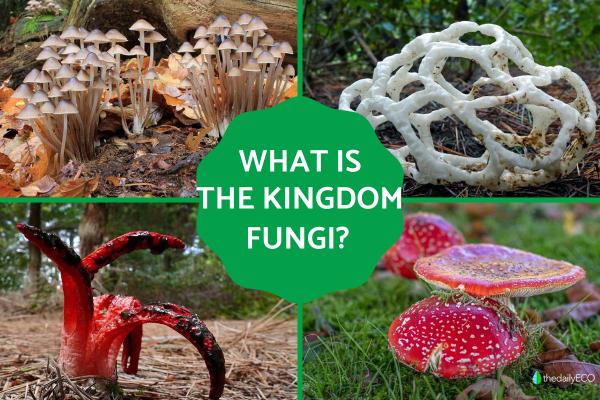
The Kingdom Fungi is one of the five kingdoms of all living things, although this will depend on where you study. Some believe there are as many as six kingdoms, others as little as three. The reason why we group organisms into kingdoms is to better understand them. Taxonomic categorization helps us to understand the similarities and differences between living things. Fungi are some of the most fascinating organisms with complex life cycles and an ability to grow in various environments. In fact, fungi can colonize moist soil, tree trunks, and other substrates.
If you want to learn more about these fascinating organisms and introduce yourself to mycology (the science of the study of fungi), continue reading this thedailyECO article on Kingdom Fungi definition and examples in biology. We also show you photos of some of the most common fungi.
What is the Kingdom Fungi?
The Kingdom Fungi is one of the 5 Kingdoms of all living organisms. The others are the Kingdoms Animalia, Plantae, Protista, and Monera. These kingdoms encompass all forms of life that exist on Earth.
The Kingdom Fungi includes all eukaryotic organisms that belong to the fungal classification, within which we can count up to approximately 144,000 different species. The biological diversity of life forms and morphological structures that fungi present make the Kingdom Fungi a group with spectacular biodiversity. Within the fungus kingdom of biology we can find:
- Yeasts
- Mold
- Mushrooms
The science that studies fungi is known as mycology. Mycologists estimate we only know about 5% of the possible fungi that exist, estimating there are 1.5 million fungi species yet to be discovered.
In the next sections, we will see many of the main characteristics of fungi, as well as their classification and some examples to differentiate them and get to know them more closely. Additionally, fungi play a vital role in ecosystems, acting as decomposers and symbiotic partners with plants and other organisms.
Characteristics of the Kingdom Fungi
The organisms within the Kingdom Fungi have developed numerous and diverse characteristics that allow them to adapt to some of the strangest and most surprising environments in nature. Some of these adaptations can be seen in the different characteristics of the Kingdom Fungi:
- They are heterotrophic organisms: this means they cannot make their own food, so they acquire their nutrients from outside sources. This process involves breaking down organic matter, thus playing a crucial role in nutrient cycling within ecosystems.
- They have a resistant chitin cell wall: this often prevents them from drying out or suffering other problems related to environmental conditions. This structural feature also provides the fungi with protection against various external threats.
- They reproduce by means of spores: they also have certain anatomical structures for their production, such as asci (containing ascospores) and basidia (with basidiospores). In fungi, reproduction can be both asexual (without the formation of a fruiting body) and sexual, allowing them to adapt and survive in diverse conditions.
- There is an immense variety of forms: another of the characteristics of the Fungi kingdom is that its organisms have very different and peculiar colors and sizes. This diversity is also reflected in their ecological roles and interactions with other organisms.
- They have a complex structure: commonly called the ‘body of the fungus’, the mycelium is made up of long filaments known as hyphae. The most visible and well-known parts of these organisms are usually their ‘fruiting bodies’, the parts responsible for producing the spores for sexual reproduction.
- They grow in different ways: some fungi grow in the form of a ‘shelf’ on tree trunks, others instead grow as ‘cups’ or even in the form of a ‘star’. They are sessile, meaning they are immobile organisms and do not move like animals can.
Learn more about the structure of fungi in our related article. Furthermore, fungi are known for their ability to form symbiotic relationships, such as lichens and mycorrhizae, which have significant ecological impacts.

Kingdom Fungi classification
The species which make up the Kingdom Fungi are classified into 5 large biological groups. This classification is mainly due to morphology, i.e., the form or shape of the organisms. They are the following:
- Basidiomycetes: fungi with basidiospores and a mushroom-shaped fruiting body. These fungi are often involved in decomposing wood and other plant material.
- Ascomycetes: these fungi contain ascospores within reproductive structures called asci. Ascomycetes are known for their role in fermentation and antibiotic production.
- Glomeromycetes: the main characteristic that defines this group of fungi is the formation of mycorrhizae, structures that establish an interspecific relationship of symbiosis with plants, also having glomerospores. These associations are crucial for plant nutrient uptake.
- Zygomycetes: the group commonly known as molds, which includes around 1000 species. Its spores are called zygospores. Zygomycetes are often found on decaying organic material.
- Chytridiomycetes: this last group of the current classification of fungi includes all microscopic organisms of the Kingdom Fungi which have zoospores or flagellated gametes as reproductive cells. Chytrids are significant in aquatic ecosystems and soil environments.
After knowing all these details, including the most common classification of mushrooms in biology, we will look at some of the most common and characteristic examples of mushroom species in the next section. You may be aware of some of them thanks to their uses in various fields such as gastronomy and medicine.
Most fungi reproduce by forming spores which allow these sessile organisms to grow in different areas. Learn more with our article on sporulation in biology. The ability to produce spores is essential for their survival and dispersal in various environments.
You can purchase many types of edible mushrooms for cooking, as we share with our affiliate link below:
[ltmbox id="iz8oHArL" label="Click to buy dried mixed wild mushrooms "]
Kingdom Fungi examples
Perhaps the most well-known mushroom is the button mushroom (Agaricus bisporus), although it has many names. This is the mushroom most used for culinary purposes and is often the first thing we think of when we think of a specific fungi. However, the Kingdom Fungi contains many more species which have an incredibly wide variety. Below, we share some of the most common examples and photos of the Kingdom Fungi in biology:
Examples of Ascomycetes
Some examples of the kingdom Fungi that belong to the Ascomycetes include:
- Penicillium citrinum: grapevine fungus used to obtain wine. It is also known for its role in the production of certain cheeses.
- Saccharomyces cerevisiae: most commonly known as brewer's yeast or baker's yeast, although these are from different strains. This yeast is crucial in baking and brewing industries.
- Molds of the genus Penicillium: they are an example of the Kingdom Fungi that are used to make antibiotics, one of the most important medicinal discoveries. They are also used to make products such as blue cheese, highlighting their diverse applications.
Examples of Basidiomycetes
Other examples of the Kingdom Fungi are the fungi that belong to the Basidiomycetes. They include:
- Sweet tooth (Hydnum repandum): an edible mushroom. It is appreciated for its culinary uses and unique flavor.
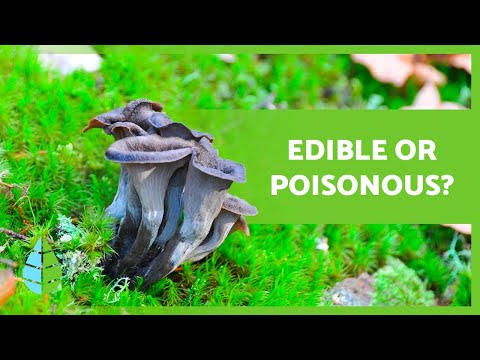
- Horn of plenty (Craterellus cornucopioides): an edible mushroom that can be seen in the photo below. Known for its distinctive appearance and taste.
- Jelly ear (Auricularia auricula judae): an edible mushroom that grows on wood. It is used in various traditional dishes.
- Common puffball (Lycoperdon perlatum): an edible mushroom, but only when white in color. Named for its bulbous appearance as shown in the photo below.
- Parasol mushroom (Macrolepiota procera): grows on well-drained soils. Its large cap makes it easily recognizable.
- Fly agaric (Amanita muscaria): poisonous and potentially deadly fungus. It is well-known for its bright red cap with white spots.
- Turkey tail (Trametes versicolor): it grows on tree trunks and is widely used in TCM or traditional Chinese medicine. Its medicinal properties are being studied for various health benefits.
- Vermilion tinderbox fungus (Pycnoporus sanguineus): grows on trunks of trees in tropical areas. It is notable for its vibrant color.
- Rounded earthstar (Geastrum saccatum): has a star-shaped growth and is an inedible mushroom. Its unique appearance makes it a subject of interest.
- Panther cap (Amanita pantherina): they are poisonous mushrooms which closely resemble the edible true blusher (Amanita rubescens), making identification crucial for foragers.


The importance of fungi in biology
Within natural ecosystems, fungi play a fundamental role in the correct balance of biological communities. Since they are responsible for the decomposition of various organisms, they allow the correct recycling and maintenance of energy and both organic and inorganic elements of the ecosystem. This decomposition process is vital for nutrient cycling and soil fertility.
In anthropic ecosystems, human beings maintain a very close relationship with fungi in our day-to-day lives, since we use them in:
- Beverages: for example, wines and beers, where yeasts are used for fermentation.
- Food production: such as cheese and bread, taking advantage of their biochemical and metabolic properties, which contribute to the flavors and textures of these products.
- Direct consumption: in the case of mushrooms and other edible fungi, which are enjoyed in various culinary traditions worldwide.
They also stand out for their use in the world of medicine and pharmaceuticals, since numerous antibiotics and useful active principles to combat diseases are obtained from the immunosuppressive and anti-epidemic properties of fungi. Fungi also act as one of the most feared pathogens for the health of people, animals, and plants, as well as having poisonous and hallucinogenic properties.
Learn more about the five Kingdoms in biology with our articles on the definition and examples of the Kingdom Monera and what is the Kingdom Protista?
If you want to read similar articles to Kingdom Fungi Definition and Examples in Biology, we recommend you visit our Biology category.
- Cabello, M. (2006) Fungi: the fifth kingdom of life. Museum Magazine, La Plata Museum Foundation (Argentina) . Volume 20.
- Uitzil, MO (2019) Hypogeous fungi: subterranean treasures of the Mexican tropics. Journal of Tropical Biology (Mexico) . Volume 3.
- Kuhar, F., Castiglia, V. & Papinutti, L. (2013) Kingdom fungi: morphologies and structures of fungi. Biological Bulletin Magazine - CONICET (Argentina). Volume 28 (7).
- Vera, B. (2000) The Mycota or Fungi Kingdom. Center for Tropical Botany, Institute of Experimental Biology (Venezuela).
- Piepenbring, M. (2018) The Fungi Kingdom: The True Fungi. The American Phytopathological Society (APS) Publications. Volume 3.