Different Types of Pine Trees

 Add us on Google
Pine trees are any of the plants in the genus Pinus. Although we most associate them with pine trees, this genus also includes shrubs. All are conifers and evergreen, meaning they are cone bearing and do not lose their leaves in winter. Pines have various characteristics with their unique scent being one of the most well known. This is thanks to its reproduction being used in various products across the world. They are also known for their rapid growth and their use as a popular form of timber.
At thedailyECO, we look at the different types of pine trees. We discover the names of these various pine tree varieties and match them with photos of the same.
- Canary Island pine (Pinus canariensis)
- Aleppo pine (Pinus halepensis)
- Bog pine (Pinus mugo)
- Black pine (Pinus nigra)
- Maritime pine (Pinus pinaster)
- Stone pine (Pinus pinea)
- Ponderosa pine (Pinus ponderosa)
- Monterey pine (Pinus radiata)
- Scots pine (Pinus sylvestris)
- Eastern white pine (Pinus strobus)
- Japanese black pine (Pinus thunbergii)
- Moorish pine (Pinus uncinata)
Canary Island pine (Pinus canariensis)
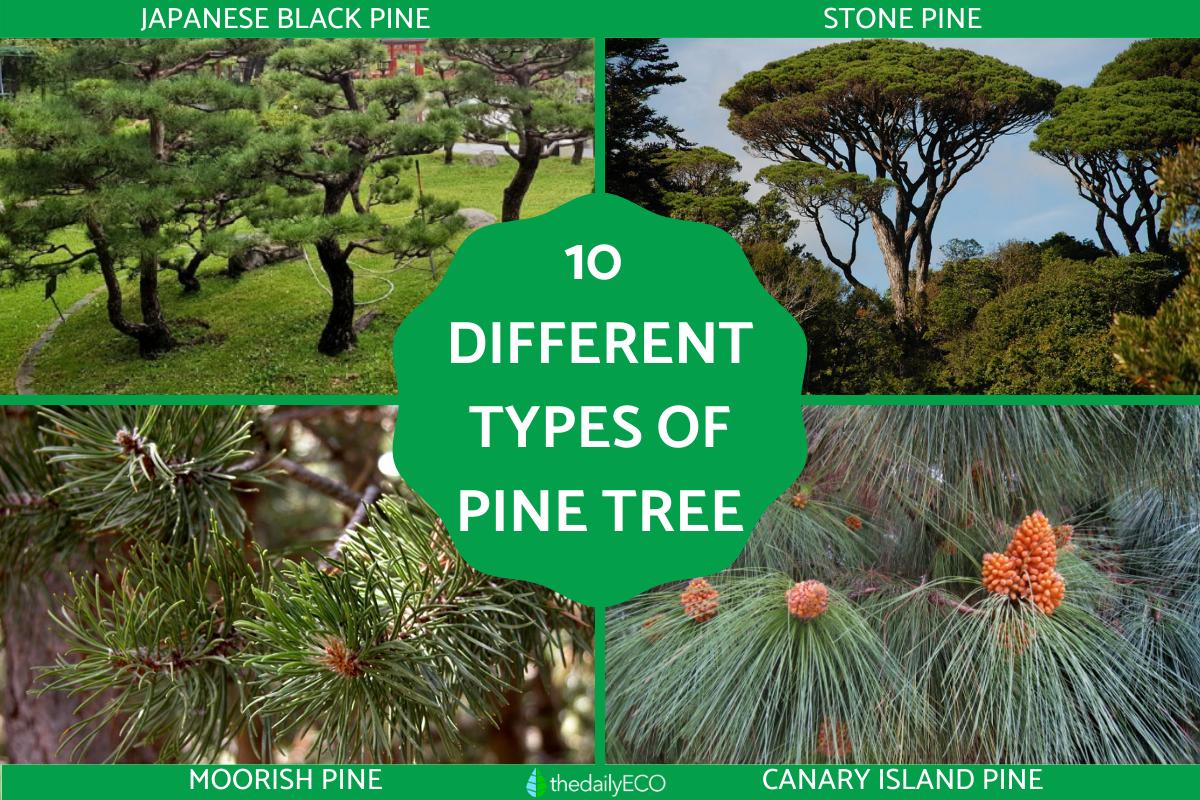
Commonly known as the Canary Island pine, Pinus canariensis is native to the Canary Islands and can reach up to 131'/40 m in height. They are also wide as their trunks can be as much as 8'/2.5 m in diameter. It is characterized by the brown color of its bark and its acicular (needle-shaped) leaves which can be as long as 12"/30 cm. These are very important in their ecosystem for capturing moisture from the air and releasing it back into the soil. Additionally, these trees play a crucial role in preventing soil erosion in their native habitats.

Aleppo pine (Pinus halepensis)
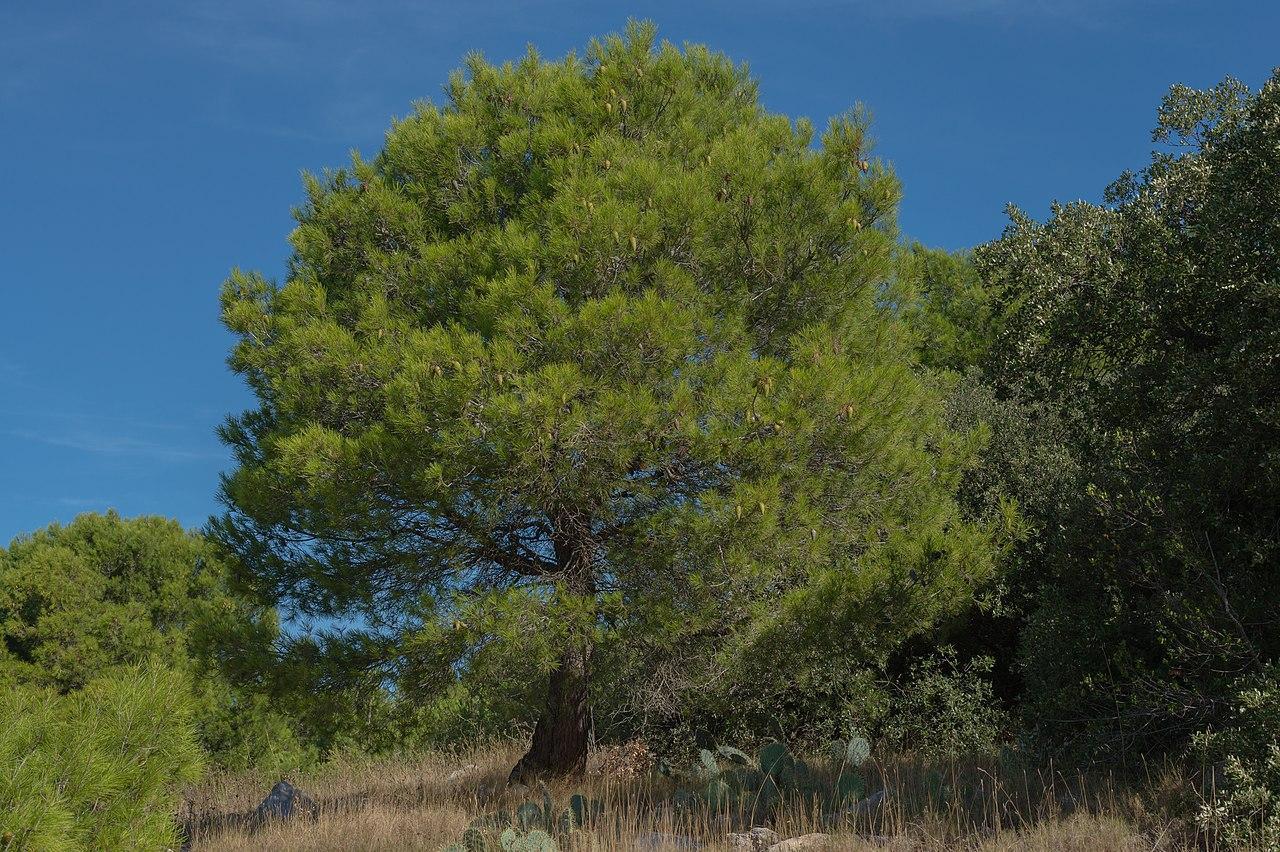
Commonly known as Aleppo pine, Pinus halepensis is a characteristic species of the Mediterranean. It usually grows near the coast. This species can reach 82'/25 m in height and is characterized by a whitish gray bark. It has an irregular upper crown, i.e., the top part of the tree (see photo). Its needle-shaped leaves are grouped in pairs, and they are also very flexible. The sap from this pine is used in Greece to make a local wine known as retsina. Moreover, this pine is highly adaptable to drought conditions, making it resilient in arid climates.

Bog pine (Pinus mugo)
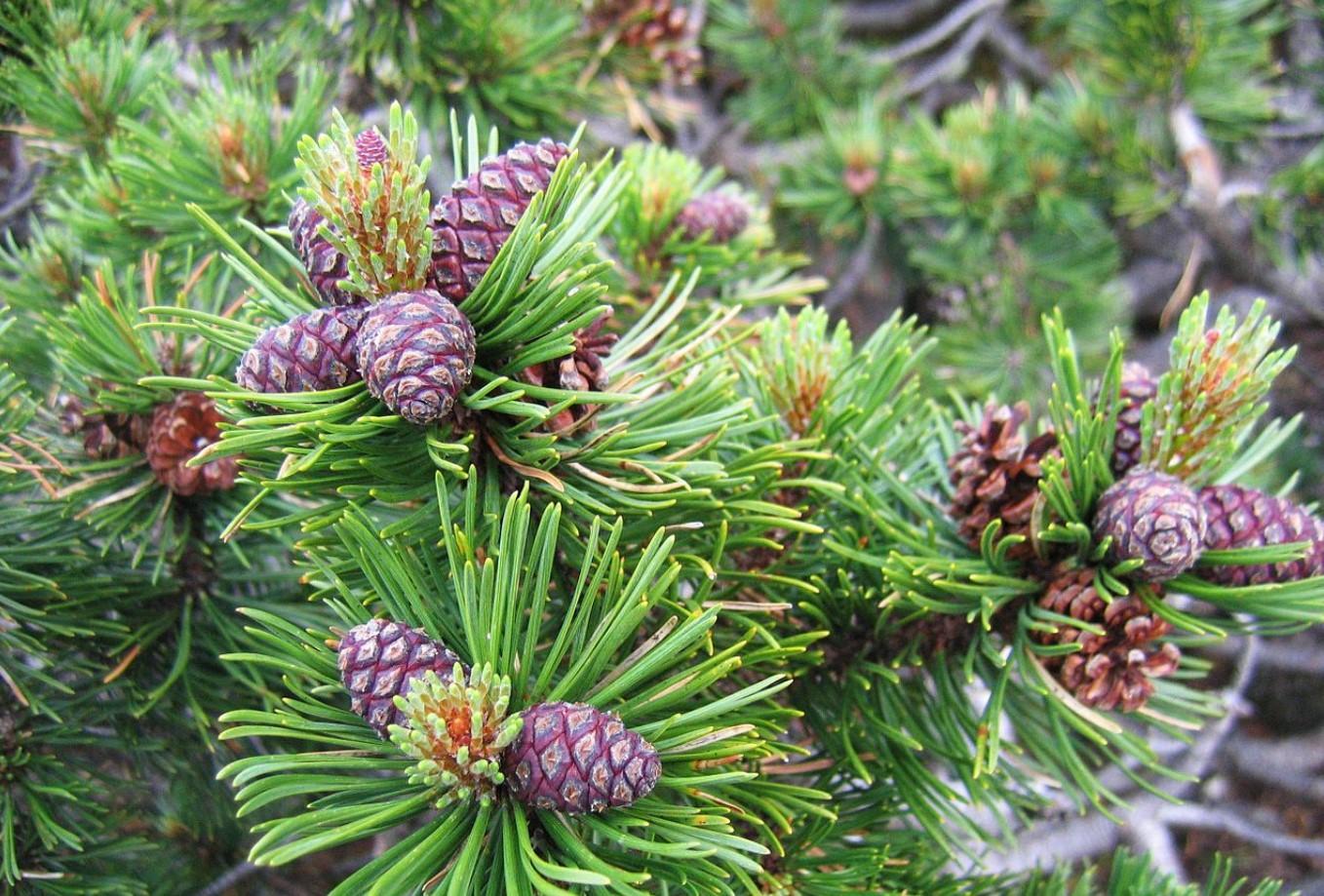
This type of pine tree is native to Europe, specifically from the mountainous areas of Central Europe. This species grows at high altitudes, between 1,500 and 2,500 meters above sea level. It can grow to a height of up to 66'/20 m. It is characterized by having a rounded crown and green needles which are rigid and sharp. As you can see in the photo below, the pinecones of this tree can have a shade of purple on them. This pine is often used in landscaping for its attractive appearance and resilience to harsh weather conditions.

Black pine (Pinus nigra)
Also known as the Austrian pine, it is a species native to Europe. It can also be found in North Africa and even in Asia Minor. This type of pine can grow up to 180'/55 m in height. It has a greyish-brown bark and dark green needles up to 20 cm long. Despite their name, the Austrian pine has the greatest native range in Turkey, but has also been transplanted to parts of the United States of America. Its adaptability to different soil types and resistance to pollution make it a popular choice for urban planting.

Maritime pine (Pinus pinaster)
Originally from southern Europe and northern Africa, like the different type of pine tree Pinus halepensis, it is a pine native to the coast. It can reach up to 115'/35 m in height and more than 1 m in diameter in the trunk. In addition, its reddish bark and its open crown make it very easy to distinguish from other pine varieties. This species is also notable for its role in reforestation efforts, especially in areas prone to wildfires due to its rapid growth and ability to stabilize soil.

Stone pine (Pinus pinea)
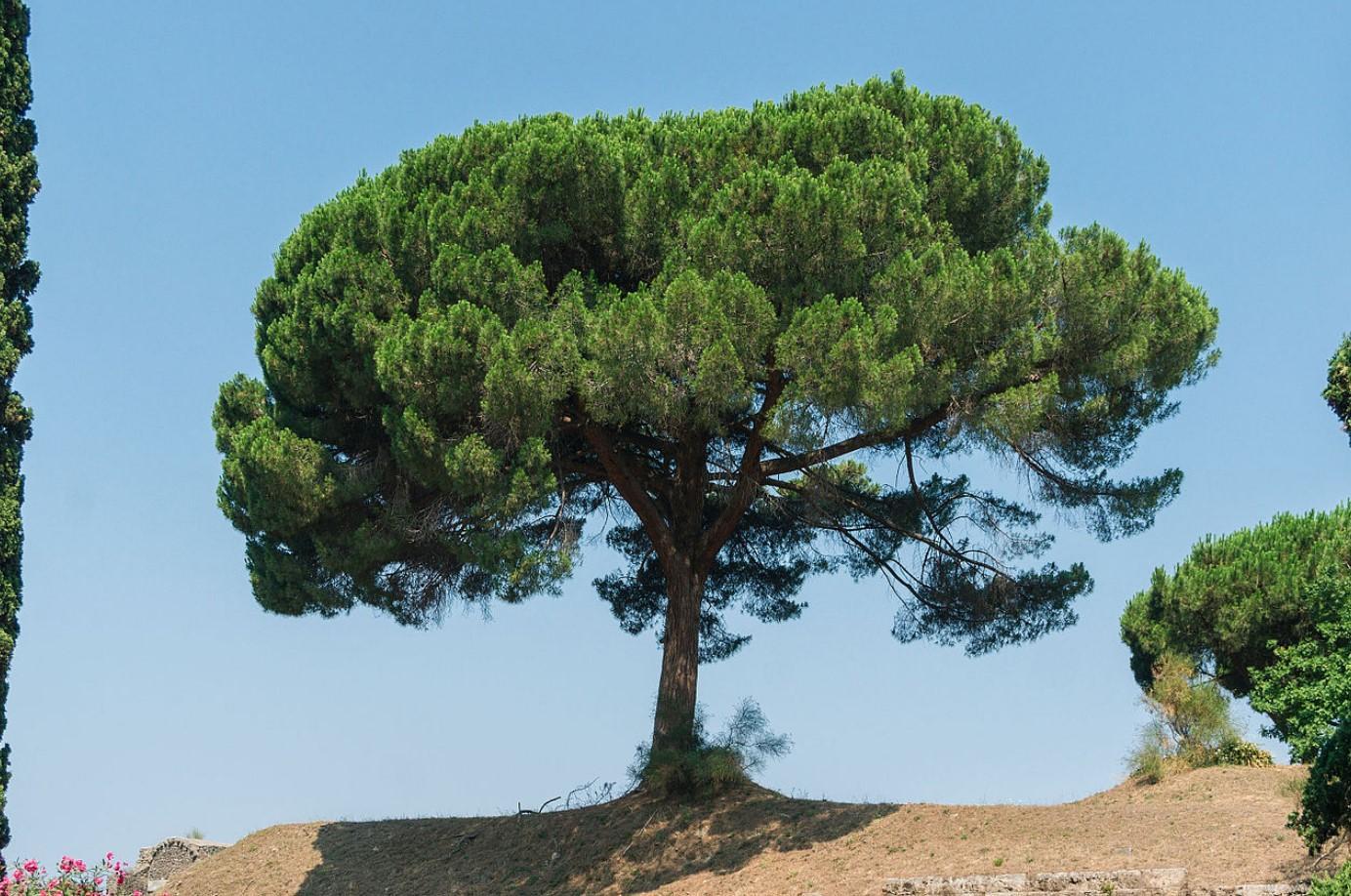
One of the best known of all the different types of pine trees. The Pinus pinea, or stone pine, is also native to the Mediterranean and can reach up to 164'/50 m in height. Generally, it usually measures about 39'/12 m. It has a straight trunk with an almost orange-brown bark. Another characteristic of this pine is that its leaves are arranged in the shape of an umbrella and can measure up to 8"/20 cm long. Its seeds, known as pine nuts, are edible and widely used in culinary dishes worldwide.

Ponderosa pine (Pinus ponderosa)
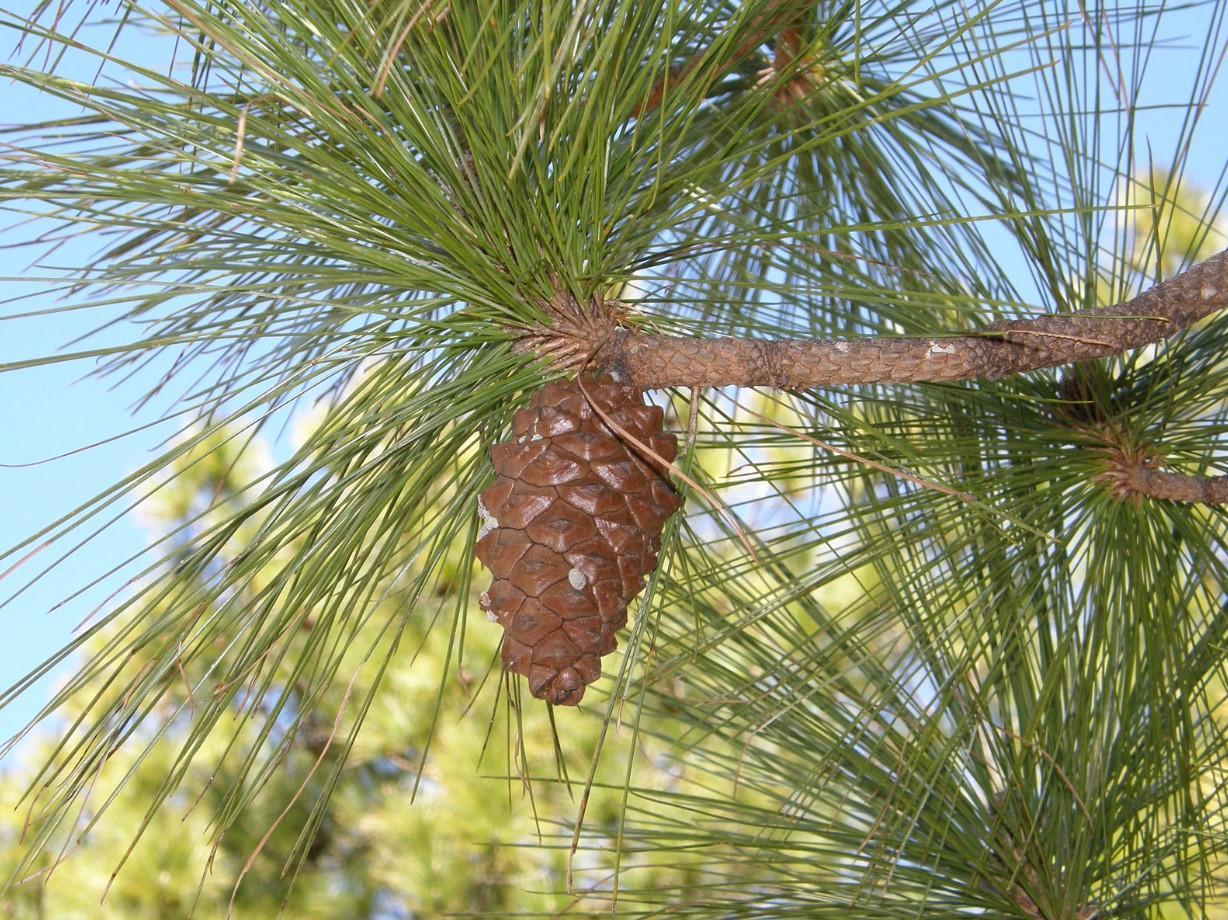
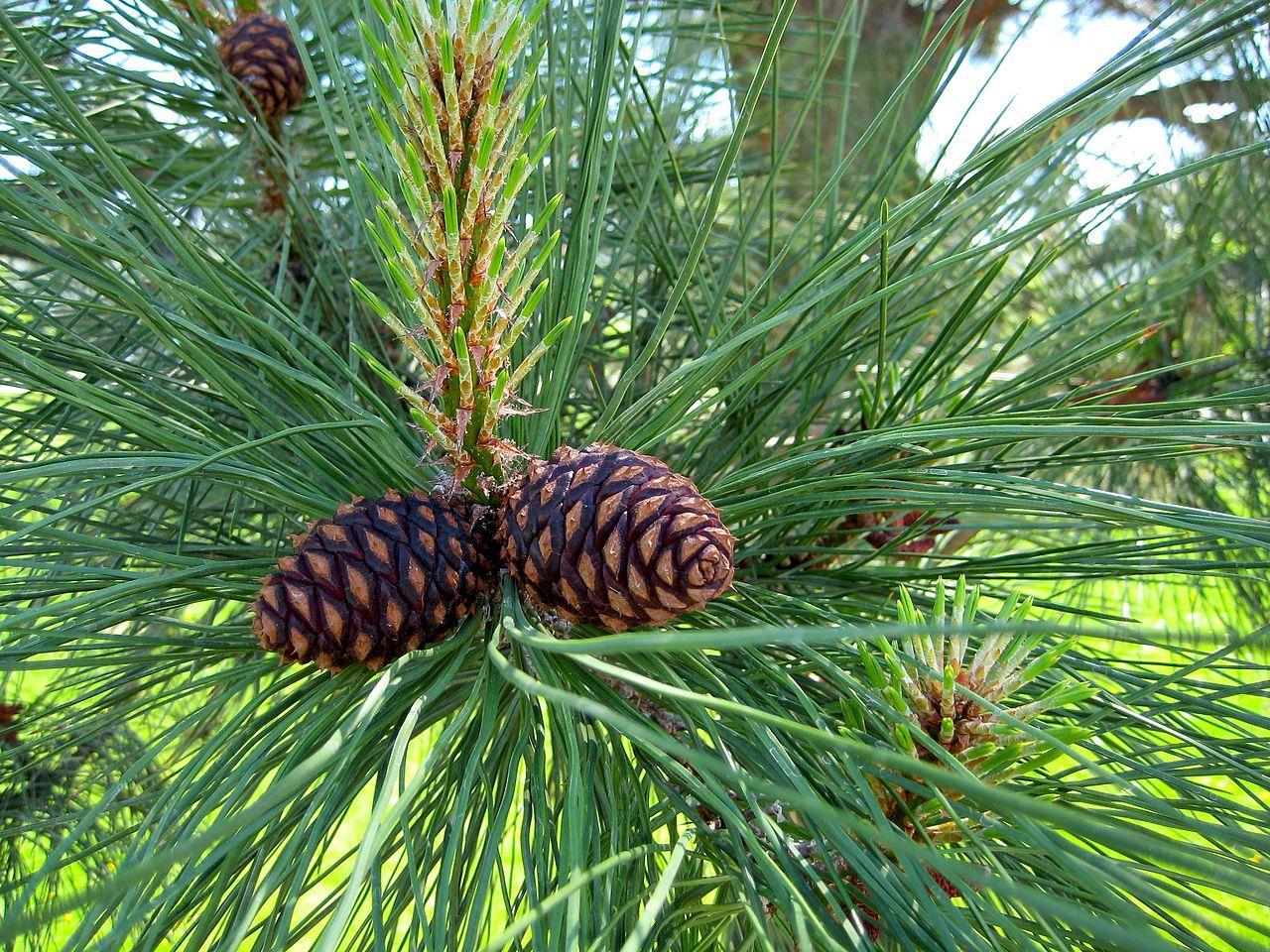
Also known as the bull pine or blackjack pine, this type of pine tree is originally from America, specifically from the eastern United States. It is characterized as a large pine tree variety, reaching up to 230'/70 m high. Its bark is brown when younger, although it can turn yellow as the tree matures. Its needles can be up to 5"/15 cm long. It usually has some egg-shaped cones which have sharp points at the end of their scales (see photo). The Ponderosa pine is crucial to its ecosystem, providing habitat and food for numerous wildlife species.

Monterey pine (Pinus radiata)
Another type of American pine tree, this one is native to the southwestern United States. This species of pine is characterized by its reddish-brown bark and bluish-green needles that can grow up to 6"/15 cm in length. This pine is very susceptible to pests, especially the well-known pine processionary caterpillar which makes nests in its branches. This caterpillar has toxic spines and must be avoided at all costs. Additionally, the Monterey pine is extensively grown for timber production due to its rapid growth rate.

Scots pine (Pinus sylvestris)
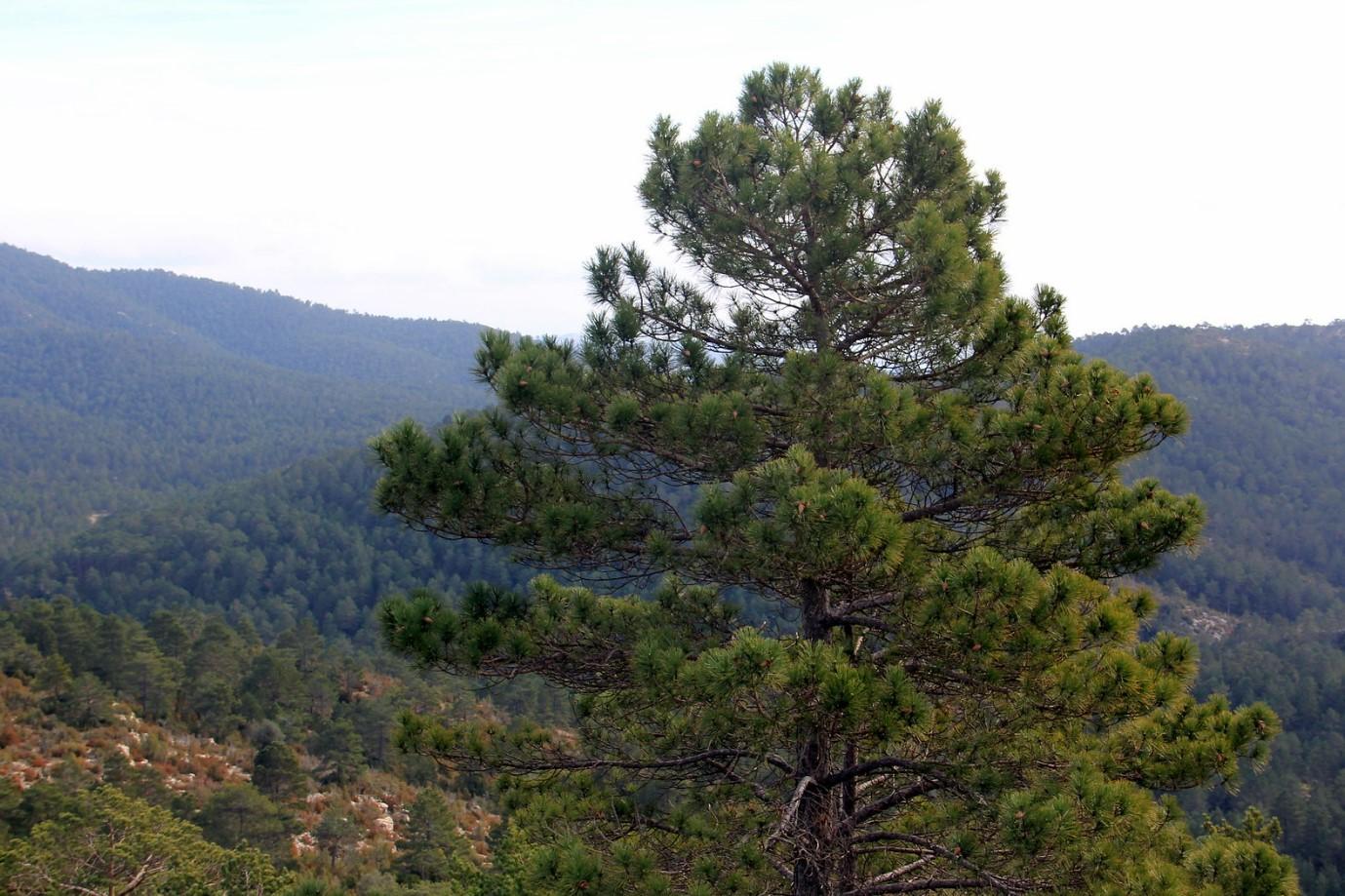
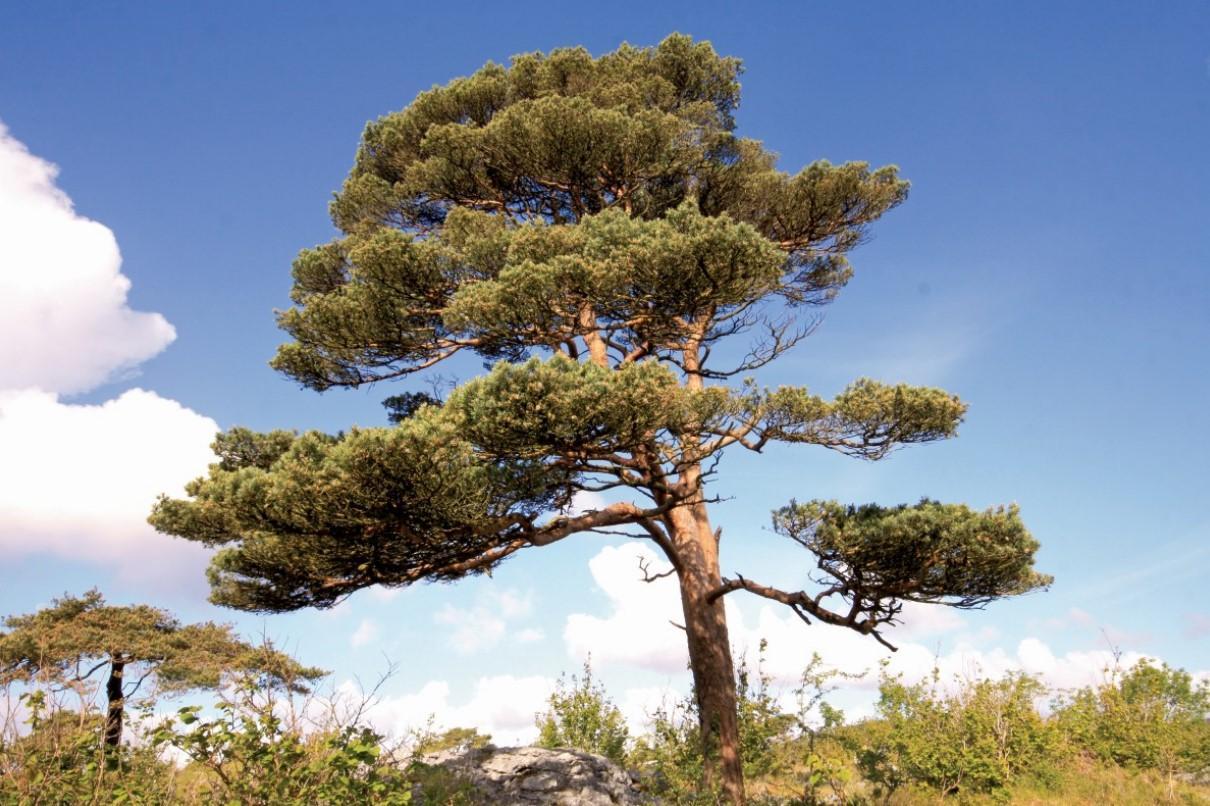
Coming from Europe, the commonly known Scots pine is a type of conifer capable of reaching 98'/30 m in height. It has a thick trunk that can be up to 16'/5 m in diameter. Its bark is reddish in color (see photo) and its needles usually measure about 3 cm, although they can be up to 7 cm in length. Although native to Eurasia, it is most associated with the UK and Ireland, particularly Scotland. This species is important in forestry and is used for construction and paper production.

Eastern white pine (Pinus strobus)
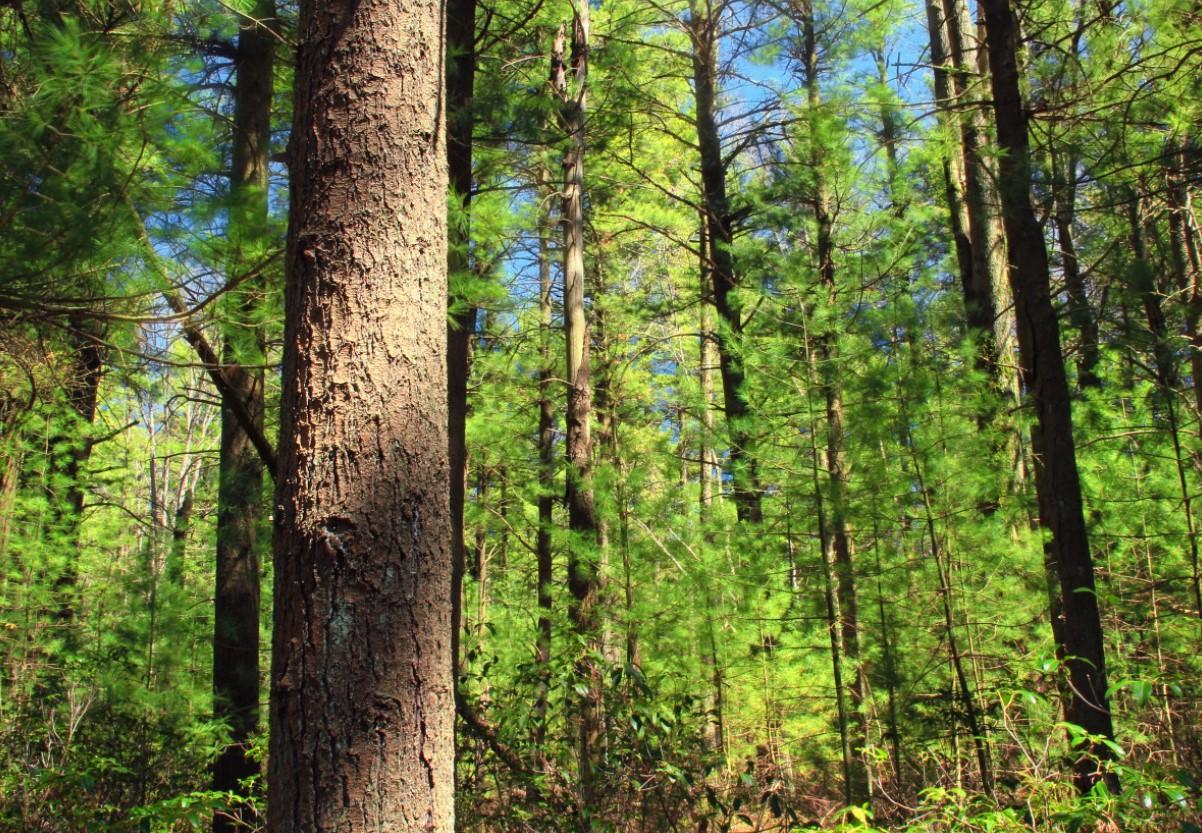
This type of pine tree is a conifer native to eastern North America. It reaches 131'/40 m in height and its trunk thickens up to 1.5 m in diameter. Its needles are long, between 6 and 12 cm. It is believed to be the tallest tree in the eastern US, although it is not as tall as the giant redwoods which can be found in the west. It is susceptible to a type of parasitic fungus which is known as blister rust. Historically, the Eastern white pine was a crucial resource for shipbuilding due to its straight and tall trunks.

Japanese black pine (Pinus thunbergii)
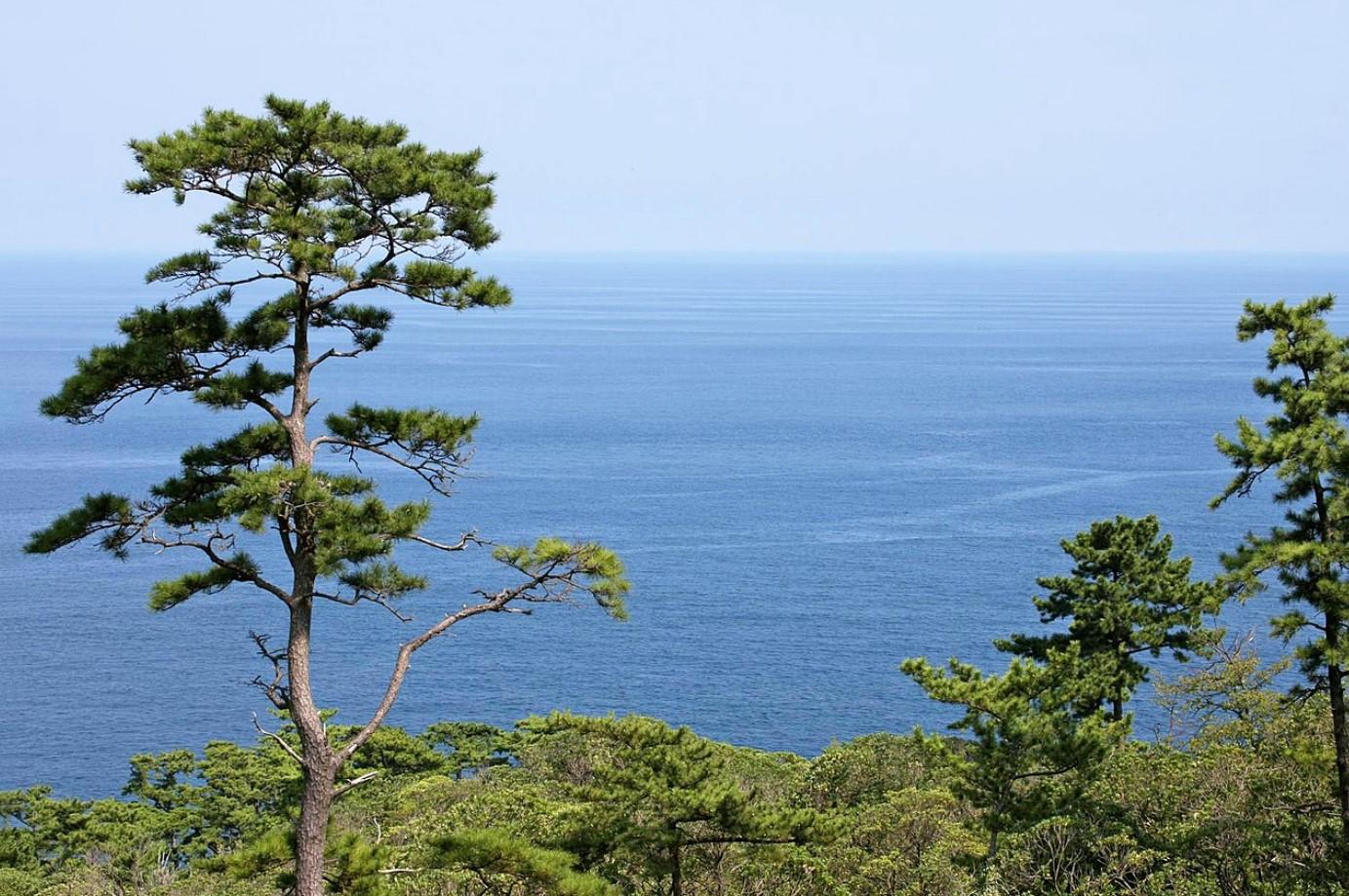
This species is native to Japan and is popularly known as simply Japanese pine. It can grow quite tall in the wild, but is usually less so in homes and gardens. This type of pine is usually pruned specially to get the trunk and crown to twist. This unique affectation is popular in designing classic Japanese gardens, including Zen gardens. What makes this different from most other pine tree varieties is that it can have a second flush of growth during its growing season. Furthermore, its tolerance to salt makes it suitable for planting in coastal areas.

Moorish pine (Pinus uncinata)
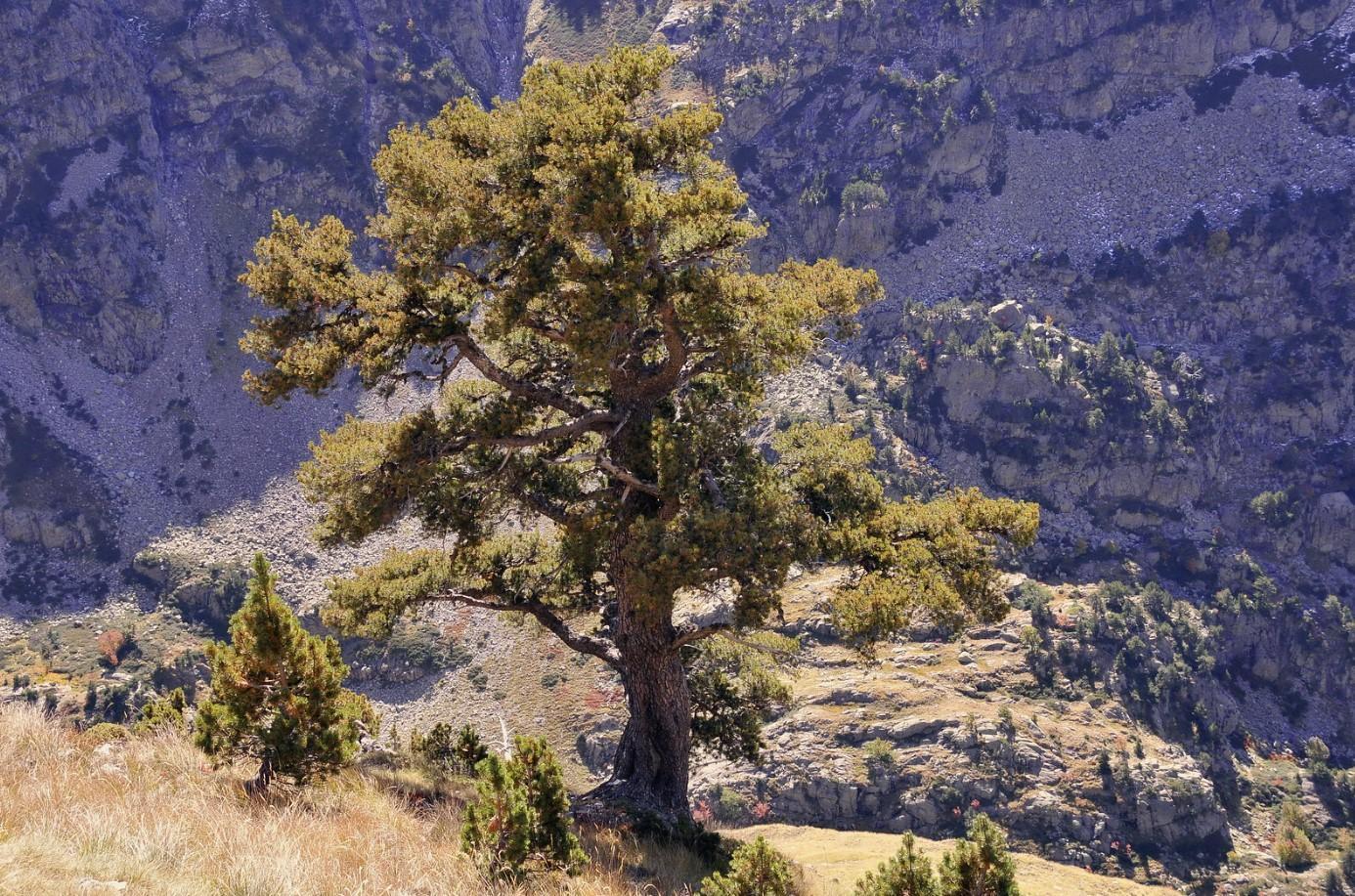
The Moorish pine is another type of black pine due to the dark shade of its bark and its thick crown. It can reach up to 82'/25 m in height and is typical of the Pyrenees area. It has small needles and dark-colored pinecones that bloom between the months of May and July. Some botanists do not consider this a species of its own, instead considering it a subspecies of Pinus mugo. Interestingly, this pine is adapted to growing in rocky soils and is often found in challenging terrains.
Now you know what are some of the most common types of pine trees, you might want to know what are the different types of trees in general.

If you want to read similar articles to Different Types of Pine Trees, we recommend you visit our Outdoor plants category.