Best Climbing Plants with Flowers

 Add us on Google
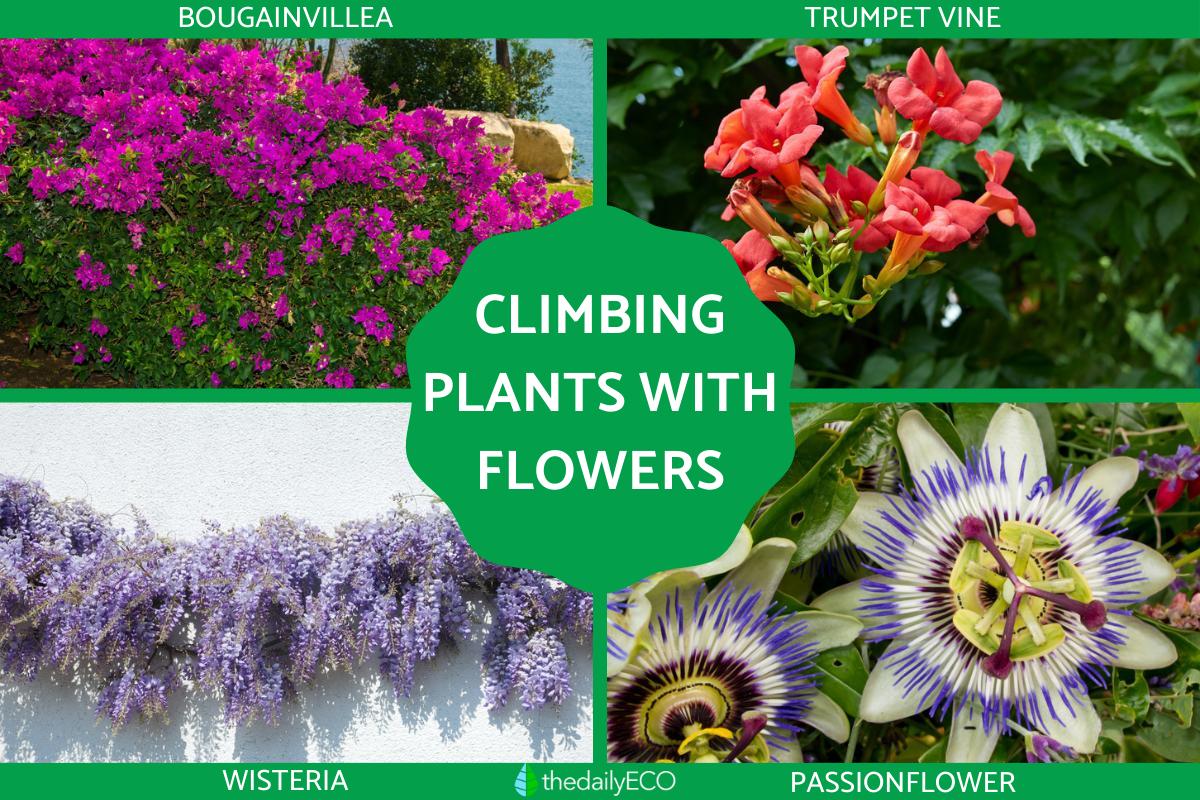
Some of the most beautiful flowering climbing plants include the black-eyed Susan vine (Thunbergia alata), clematis (Clematis spp.), bougainvillea (Bouganvillea spp.), morning glory (Ipomoea spp.), trumpet vine (Campsis radicans), wisteria (Wisteria spp.), golden trumpet (Allamanda cathartica), blue passionflower (Passiflora caerulea), Japanese honeysuckle (Lonicera japonica) and copihue (Lapageria rosea).
Flowering plants can be a beautiful edition to homes and gardens, but we need to ensure we use the right plant for the right space. Climbing plants are also known as vines. While most vines are flowering plants, we often do not associate climbers with blooms. At thedailyECO, we show why this perception is wrong with our list of the 25+ best climbing plants with flowers.
- Black-eyed Susan vine (Thunbergia alata)
- Clematis (Clematis spp.)
- Bougainvillea (Bougainvillea spp.)
- Morning glory (Ipomoea spp.)
- Trumpet vine (Campsis radicans)
- Wisteria (Wisteria spp.)
- Golden trumpet (Allamanda cathartica)
- Blue passionflower (Passiflora caerulea)
- Japanese honeysuckle (Lonicera japonica)
- Copihue (Lapageria rosea)
- Other flowering climbing plants
Black-eyed Susan vine (Thunbergia alata)
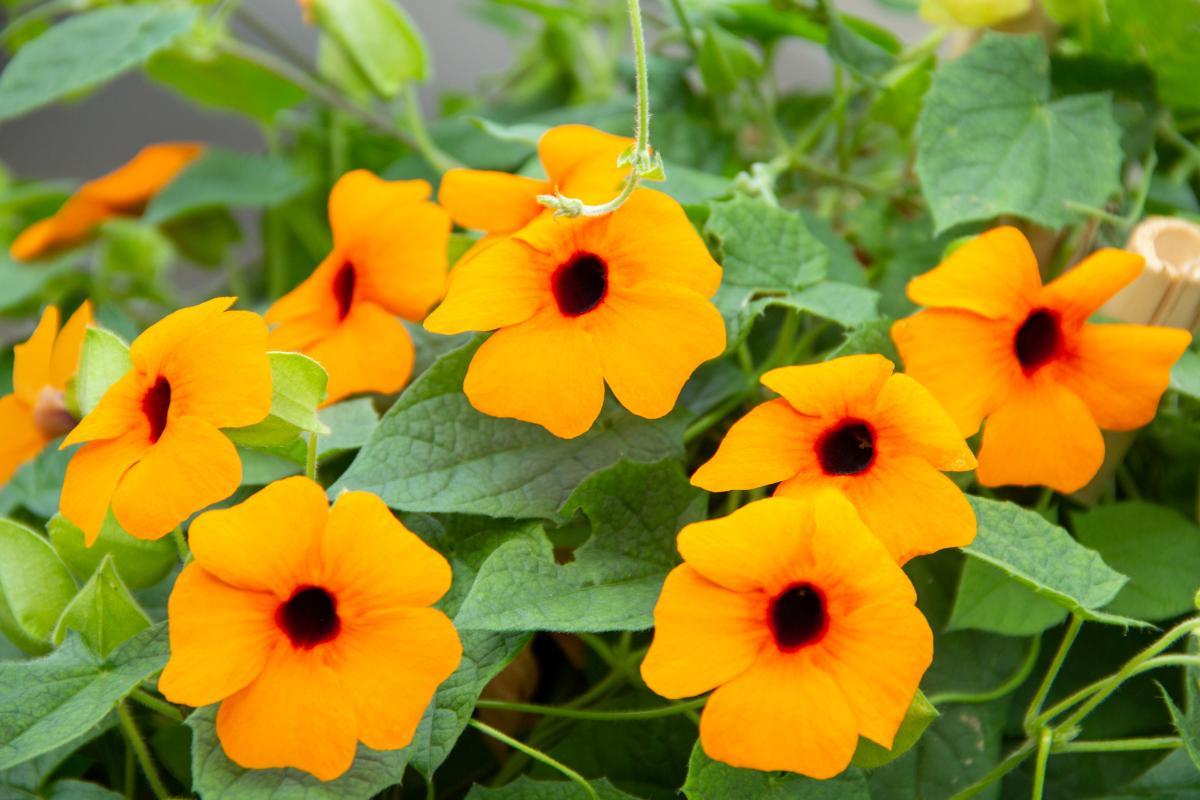
It is a vine that produces five-petalled flowers which are bright orange or yellow in color. As the photo shows, the pistil is black which provides their common name. They grow in abundance, often being used to cover garden fences or a trellis against the wall. Unfortunately, their fast rate of growth and adaptability makes them an invasive species, so they need to be planted with care.
Black-eye Susan vines are of African origin, but can now be found in almost any temperate climate. In the wild, the stems grow by wrapping around tree branches. The leaves are elongated and heart-shaped. They are a climbing plant with flowers that can be used to cover dead tree trunks.
These vines are also beneficial for attracting pollinators such as bees and butterflies, which adds to their ecological value.
If you want to grow these flowering vines at home, you can do so by purchasing their seeds below:

Clematis (Clematis spp.)
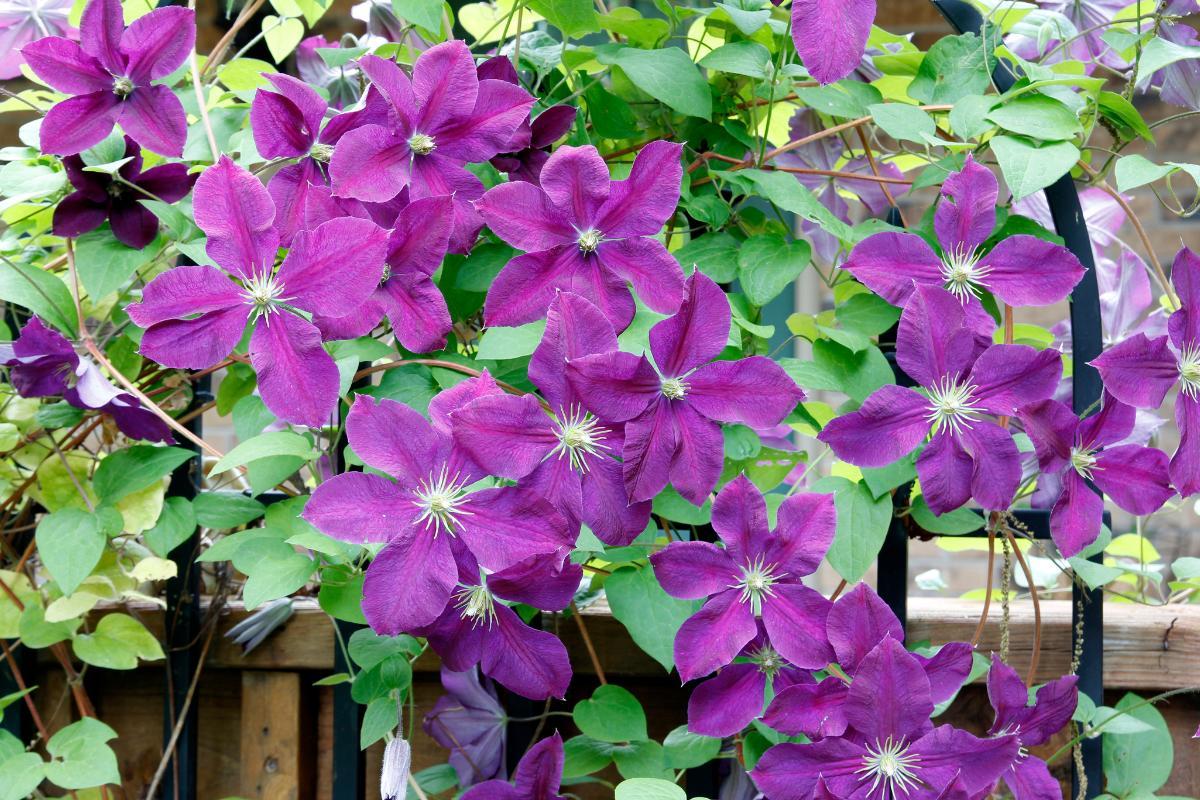
One of the most popular ornamental climbing flowers, clematis flowers fare especially well in temperate zones. This is because they thrive in the sun, but can also resist cold. They develop woody stems and vines. The most striking feature of the flowers are not the petals, but the sepals.
There are many varieties of clematis which come in different colors and shapes. For example, Clematis 'Esme' has pale lavender flowers, Clematis 'Marta' has fuchsia pink flowers and Chinese clematis (Clematis tibetana subsp. Vernayi) produces flowers that hang like a bell. They are used to decorate pergolas or walls, being able to adhere well to brickwork without a trellis.
Since they can fare well even during colder times, they should survive the winter. Learn more with our guide to the best outdoor winter plants for pots.
Additionally, clematis is known for its ability to coexist with other plants, making it an ideal choice for mixed gardens where it can weave through other specimens, adding layers of color and texture.

Bougainvillea (Bougainvillea spp.)
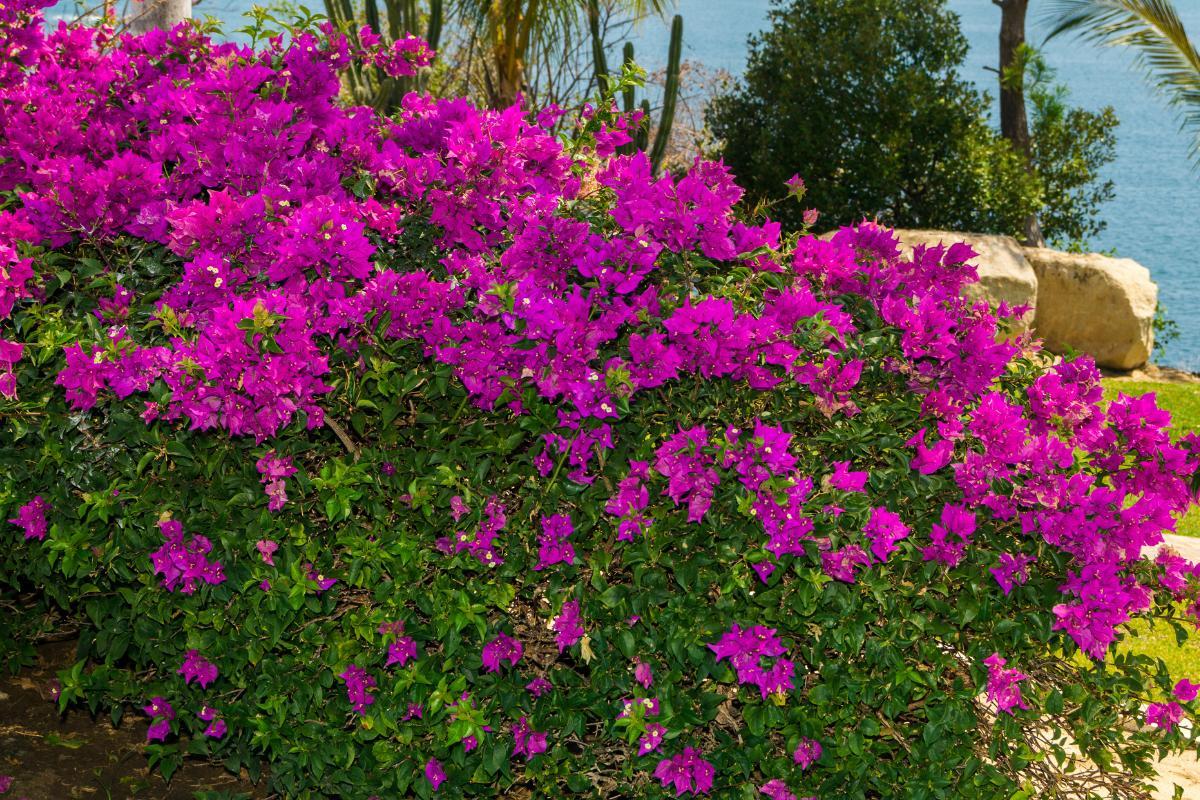
When you look at bougainvillea climbing flowers in the photo below, what you might think is the flower is actually the bract of the plant. These are modified leaves that protect and support the flower. Although they are most associated with purple inflorescence, bougainvillea can be pink, white, orange, red or pink.
They have a paper-like texture, which is why it is sometimes known as paper flower. They grow like shrubs, but are excellent climbers when they have a wall for support. They are vigorous and fast growing, with dark green leaves of a shiny texture.
Bougainvillea is not just a feast for the eyes; it also provides a natural habitat for small birds and insects, contributing to the biodiversity of the area.
If you love flowering plants with the common bougainvillea color, you may want to check out our guide to best purple flowering plants.

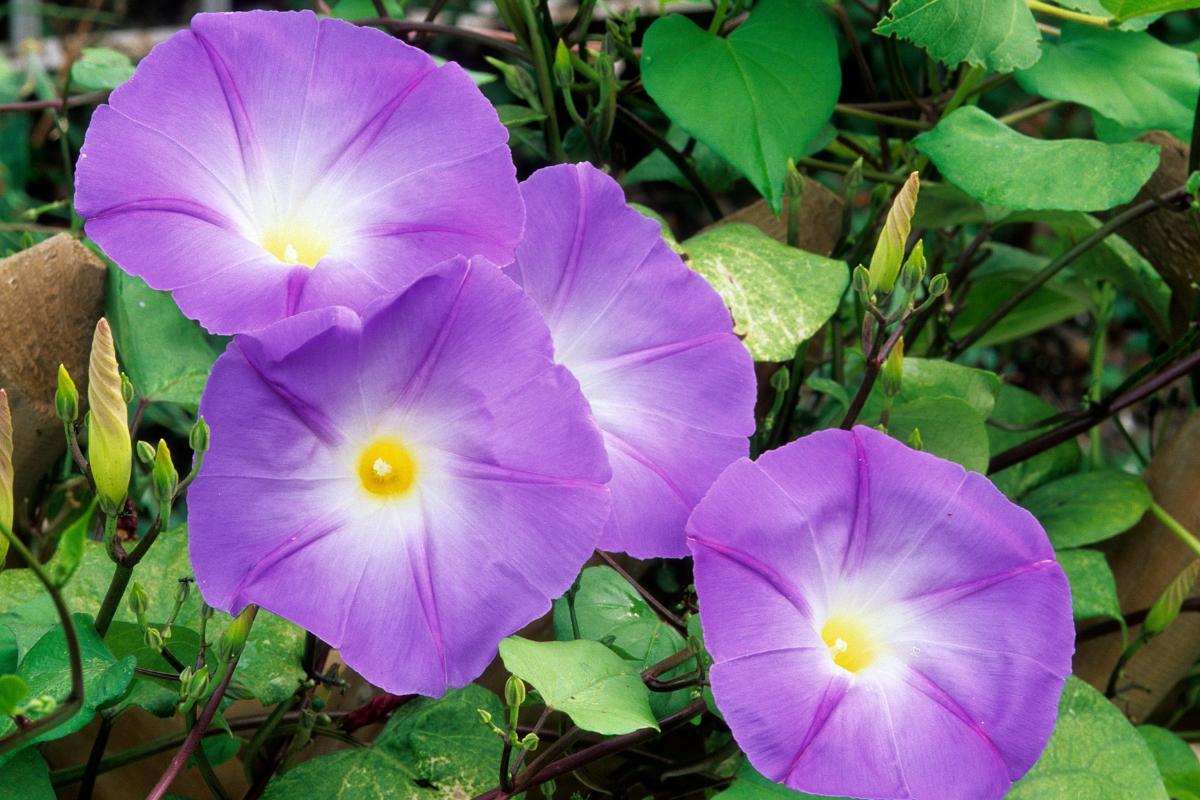
Morning glory (Ipomoea spp.)
This flowering climbing plant is native to the American tropics and is herbaceous. The full-corolla flowers open only in the morning, hence their common name. There are species in blue, violet, pink or white, with the common violet variety pictured in the photo below.
They usually grow wild along paths or in fields, but they can also be easily grown in gardens from their seeds. The leaves are heart-shaped and the plant has tendrils. These are spirals with which it hangs from branches to climb further.
Morning glory is also known for its rapid growth, making it ideal for quick coverage of fences and trellises. However, its seeds can be toxic if ingested, so caution is advised.
Grow your own morning glory climbing flowers with the link below:

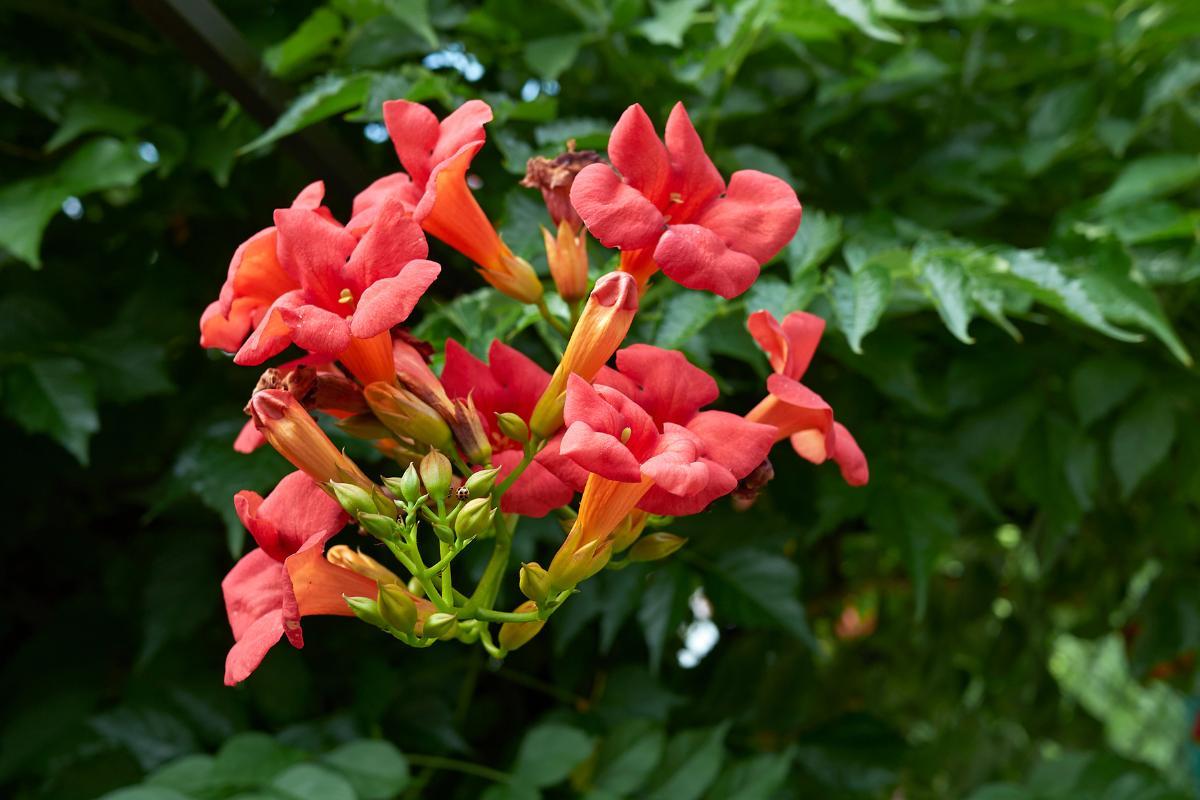
Trumpet vine (Campsis radicans)
These climbing flowers produce large, voluminous-looking orange flowers. They are tubular in shape and about 4" long. As depicted in the photo below, the flowers are thin, but then open out into a bell shape, just like the musical instrument which gives them their common name. Their flowers grow in clusters and the leaves are compound. They are woody and develop a trunk. If you want to buy your own trumpet vines, use the link below.
The trumpet vine is particularly favored by hummingbirds, which are drawn to its bright colors and ample nectar. This plant is not only ornamental but also supports wildlife by providing food sources.

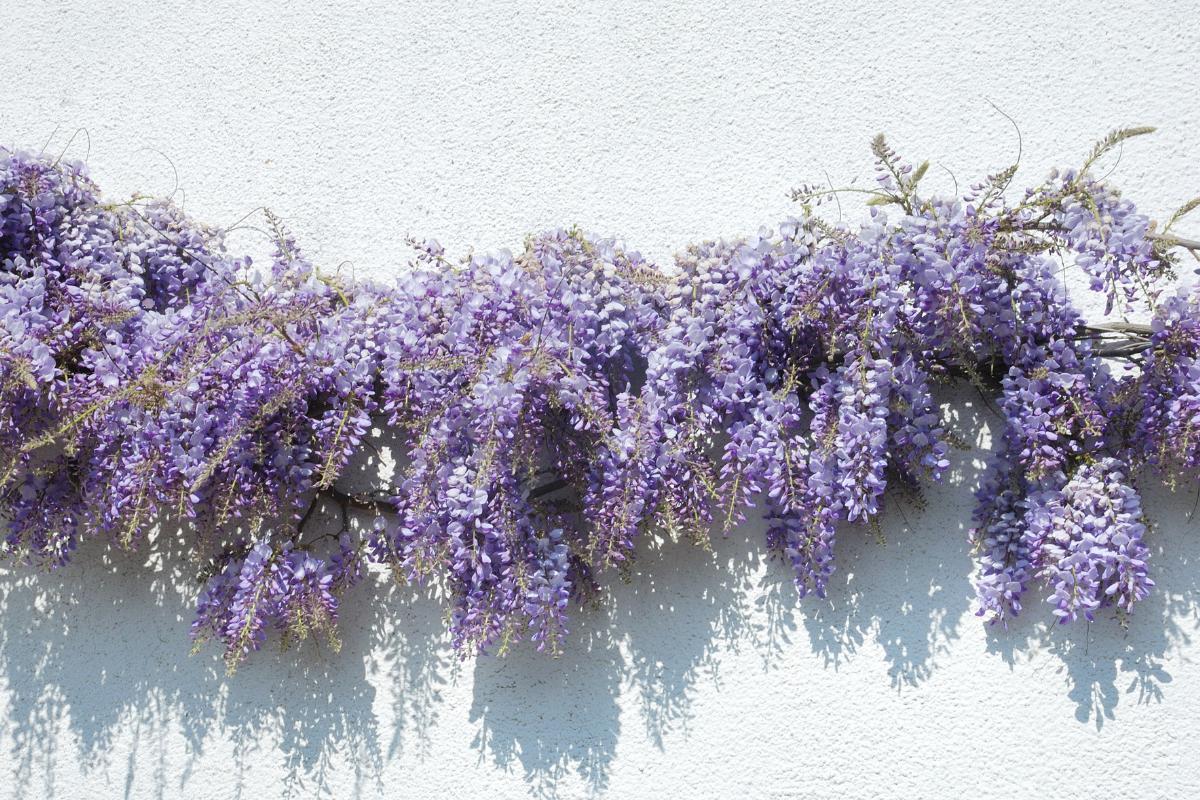
Wisteria (Wisteria spp.)
This is a climbing plant with flowers that pushes its way through any support it finds. Its stems twist tightly around various surfaces and will eventually become woody. As seen in the photo below, they produce spectacular clusters of lilac flowers. Depending on the variety of wisteria, they can measure anywhere between 0.5-3.2 ft (15-100 cm). The flowering is abundant.
Wisteria is usually used on the walls of houses, so that they cover the facades with flowers. They can also be placed on pergolas, making a natural flower roof as they fall down. It is one of the most sought-after flowering climbing plants due to the ease of care and the great romantic spectacle they offer.
Moreover, wisteria's fragrance is another appealing attribute, making it a perfect addition to gardens where scent is a key component.
Not all flowering plant are vines. Take a look at many of the various types of ornamental plants in our related guide.

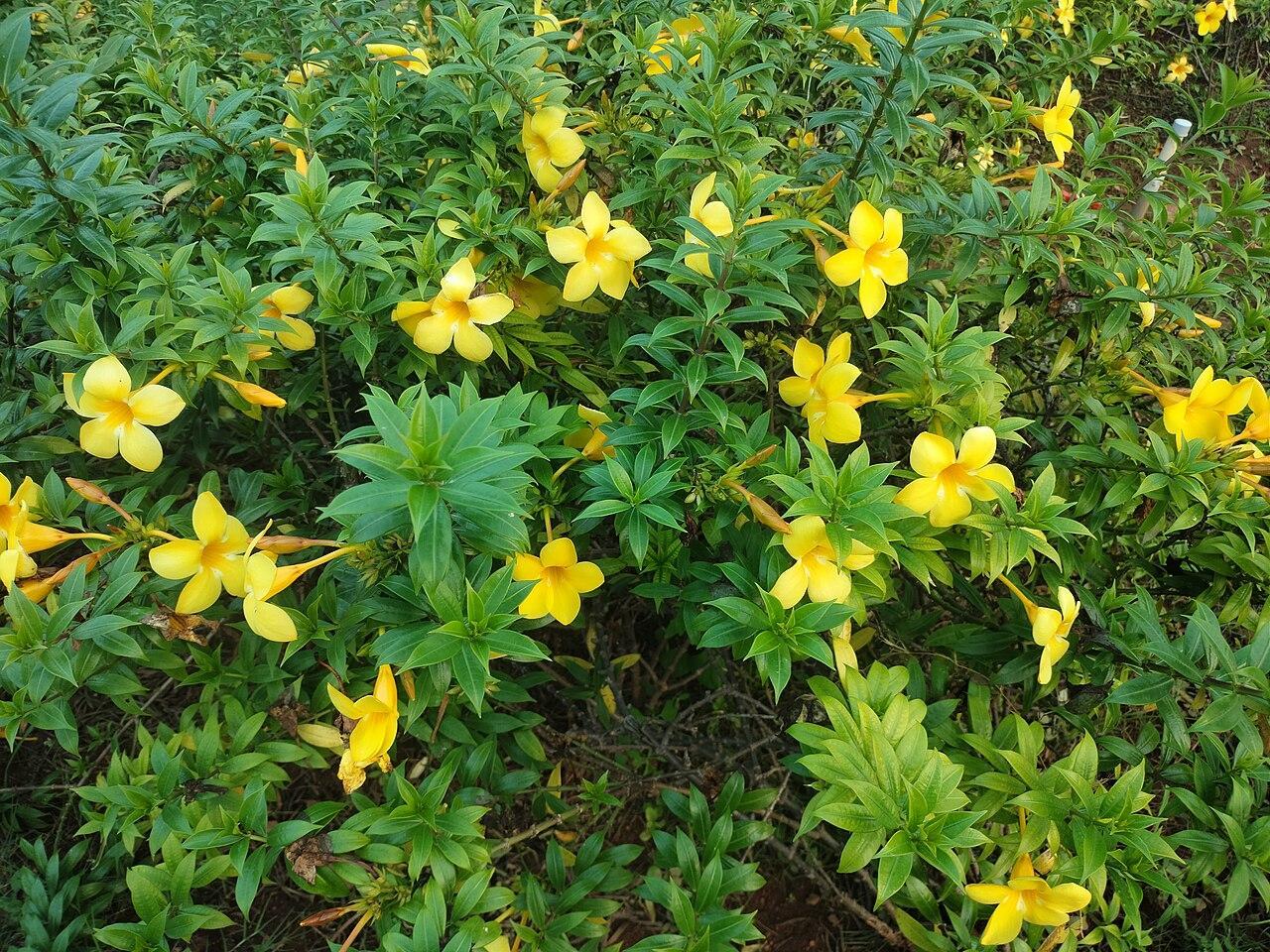
Golden trumpet (Allamanda cathartica)
Another flowering vine plant with trumpet-shaped flowers, we can find the golden trumpet. These are so called due to the large yellow flowers they produce. They are American tropical climbers which develop woody stems with age. The growth is vigorous, it has simple leaves and flowers in summer and autumn. They need full sun exposure to thrive. Although they are a type of climbing plant with flowers, they can also be tended into a shrub form.
Golden trumpet plants are also noted for their pest-resistant properties, which makes them a durable choice for many gardeners.
Learn more about the differences between shrubs and other plants with our article on the different types of trees.

Blue passionflower (Passiflora caerulea)
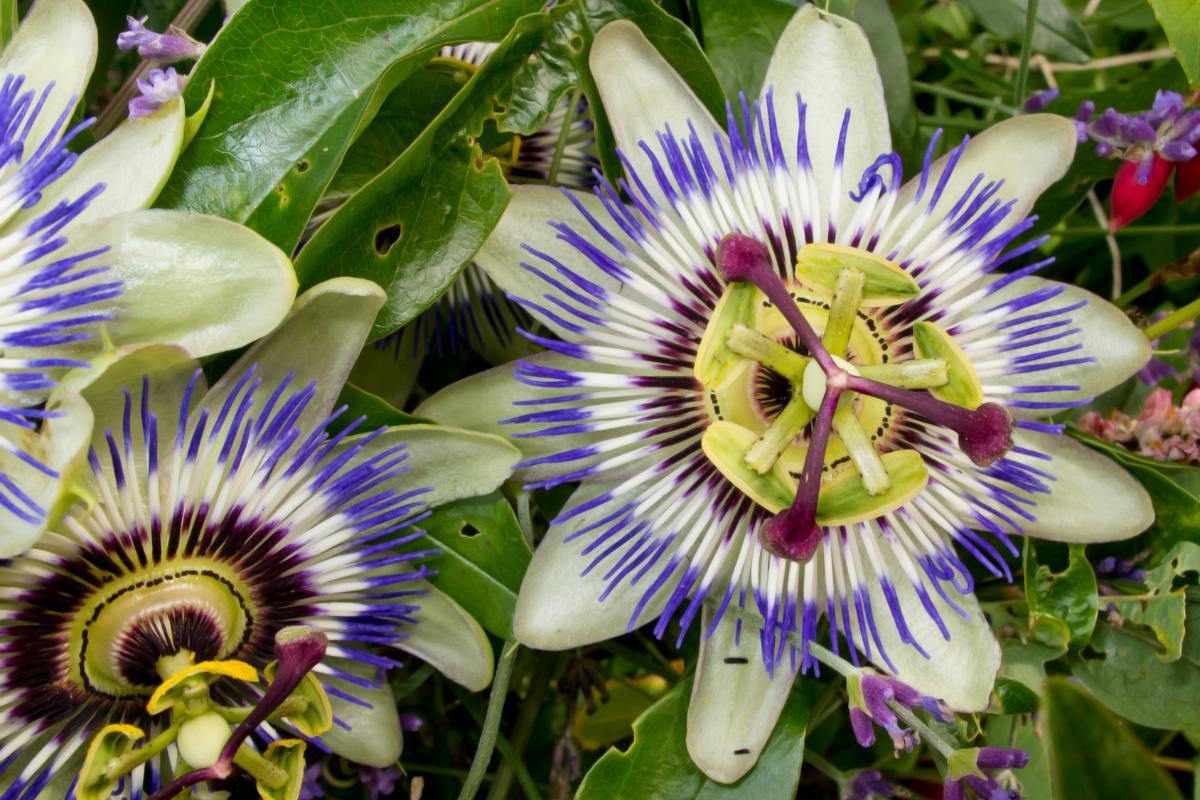
Also known as the common passionflower, the blue passionflower is an exotic flowering climbing plant which produces intricate flowers as shown in the photo below. These corollas have complex structures which can appear in shades of purple, white and yellow all at the same time.
Blue passionflowers grow best in warm climates, so they may not be a vine for everyone. Once established, they can grow on roofs, fences, trellises or various other structures, developing tendrils to do so. They produce a fruit which is related to the passionfruit, but it is not as delicious as the latter.
This plant is celebrated not only for its beauty but also for its medicinal properties, as it has been traditionally used to alleviate anxiety and insomnia.
Learn about another exotic fruit with our article on the properties and benefits of mango.

Japanese honeysuckle (Lonicera japonica)
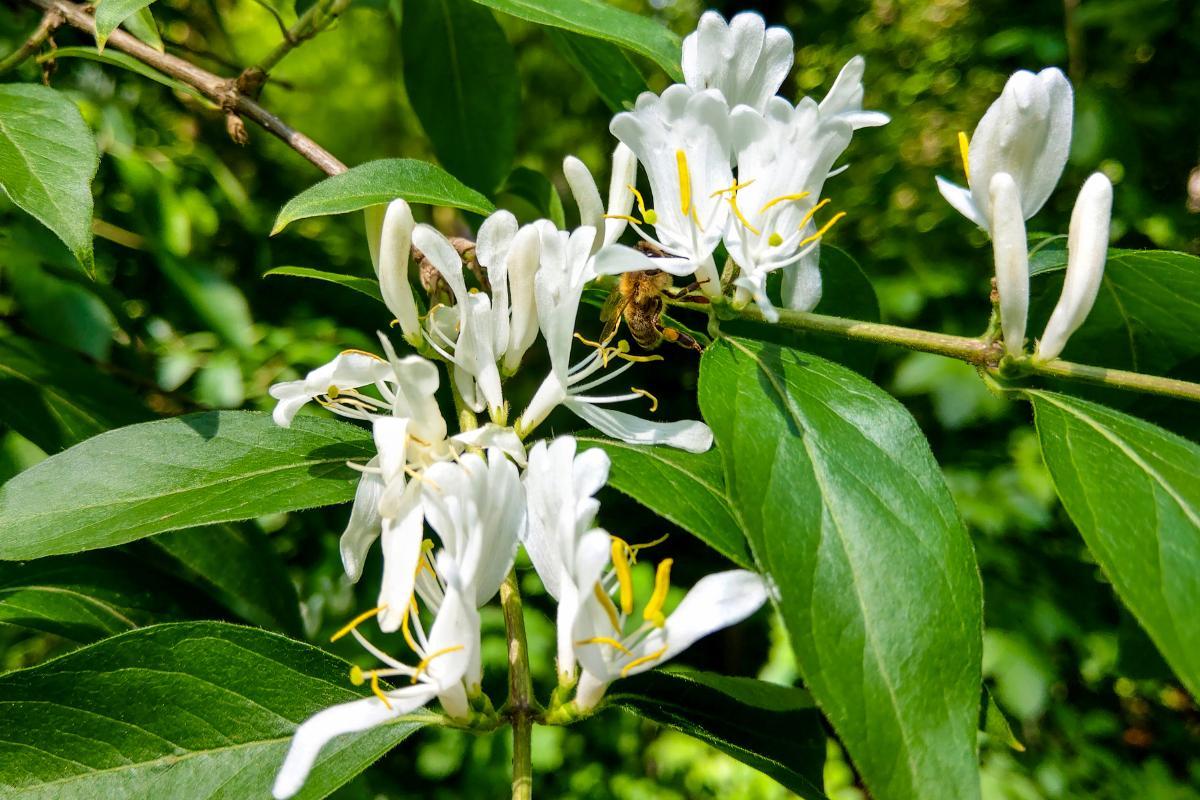
This is a herbaceous vine native to Asia. It produces delicate white flowers that open like lips with long tongues. They emit a very sweet and unique aroma that provides a great sensory experiences to any garden, in addition to their beautiful flowers. Once the flowers are about to fall, they change to yellow. The growth is abundant, it develops woody stems and can measure up to 10 meters in height. It is invasive, but if controlled in gardens it should not represent a problem.
As their name suggests, honeysuckles have sweet nectar. This makes them very attractive to various pollinators, including hummingbirds. Japanese honeysuckle also serves as a natural remedy in some cultures for respiratory ailments.
Learn about the different types of plant that attract hummingbirds in our related article.

Copihue (Lapageria rosea)
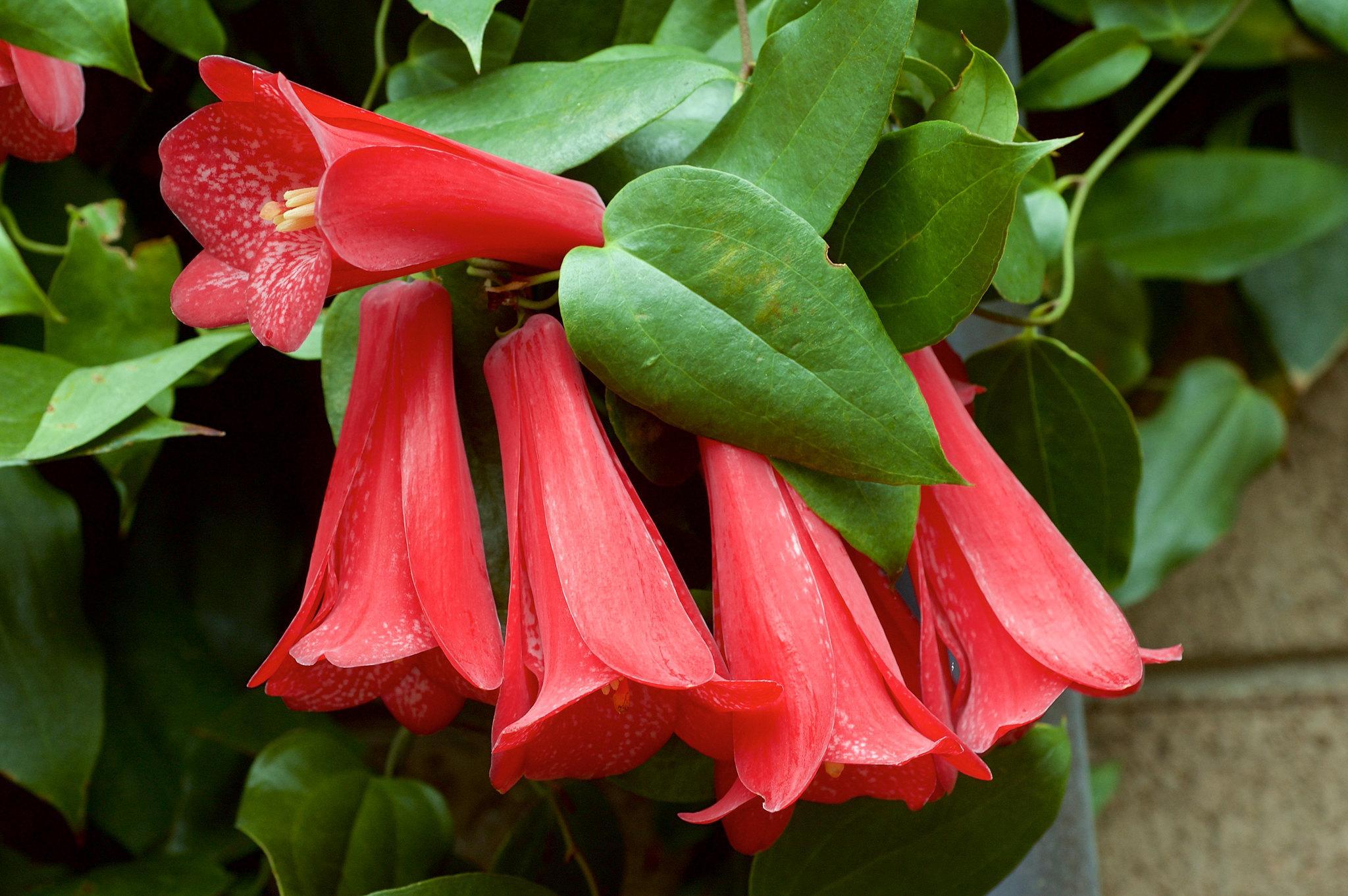
They grow in the humid forests of Chile, but are now cultivated in many other countries for their great beauty. The flowers are red, although there are also pale pink variants. They are waxy and hang like bells, but more closed than trumpet vines.
It is a herbaceous creeper that entangles around the trunks of other trees, so it can be useful for covering mesh or fences. The leaves are large and hang from the vine. It is recommended for shade gardens. You have to take care to protect them from cold winds and frost.
Copihue is the national flower of Chile and holds cultural significance, often being used in local festivals and decorations.

Other flowering climbing plants
In addition to our list of the best climbing plants with flowers, you may be interested in the following flowering vines:
- Trailing lily (Bomarea caldasii)
- Climbing Senecio (Senecio scandens)
- Mutisia (Mutisia oligodon)
- Climbing hydrangea (Hydrangea petiolaris)
- Silver lace vine (Fallopia baldschuanica)
- Star jasmine (Trachelospermum jasminoides)
- Common (Jasminum officinale)
- Chilean potato vine (Solanum crispum)
- Climbing rose (Rosa spp.)
- White mandevilla (Mandevilla boliviensis)
- Chocolate vine (Akebia quinata)
- Cypress vine (Ipomoea quamoclit)
- Sweet pea (Lathyrus odoratus)
- Scarlett runner bean (Phaseolus coccineus)
- Yellow cestrum (Cestrum aurantiacum)
- Florida watercress (Nasturtium floridanum)
Now that you know some climbing plants with flowers, you might want to learn about some other plants for the garden with our article on plants with bell-shaped flowers.
Each of these vines offers unique aesthetic and ecological benefits, making them versatile choices for enhancing garden landscapes.
If you want to read similar articles to Best Climbing Plants with Flowers, we recommend you visit our Outdoor plants category.
- Beatty, R., Beer, A., & Deeming, C. (2010). The book of nature. Great Britain: Dorling Kindersley.
- Heimberger-Preisler, K. (2008). Gardens in pots. Spain: Editorial Hispano Europa, SA.
- Buczacki, S. (1995). Climbing plants. Spain: Tursen/Hermann Blume.