
Wild animals
73 articles

While we refer to the common raccoon (Procyon lotor) simply as the raccoon, this is a name which can apply to any member of the Procyon genus. While they differ in terms of distribution, markings and other characteristics, they have many similarities. These include their distinctive paws which have thumbs...

The diversity of reptiles in Spain is one of the richest in Europe, largely due to its varied climate. Spain is a country which has many different geographical features, habitats and climates, meaning many lizards species can adapt to different areas. In addition to lizards such as the gecko, there are snakes...

The saltwater crocodile, often called the "saltie," is the ultimate apex predator. With a legacy stretching back over 200 million years, it has honed its hunting techniques to perfection, ruling freshwater and coastal waters across Southeast Asia, Australia, and beyond. Standing at the top of its food...
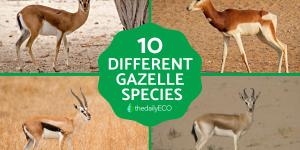
Gazelles are interesting animals in the antelope family. They are known for their speed and agility, which help them thrive in different environments. There are around 15 species found across Africa and parts of Asia, each with unique characteristics and adaptations suited to its habitat.
The following AnimalWised...

The different types of flamingos include the American flamingo (Phoenicopterus ruber), Chilean flamingo (Phoenicopterus chilensis), Andean flamingo (Phoenicoparrus andinus), puna or James's flamingo (Phoenicoparrus jamesi), greater flamingo (Phoenicopterus roseus) and the lesser flamingo (Phoeniconaias minor).
All...

Animals, a diverse group of living organisms, play a vital role in ecosystems worldwide. But what exactly makes an organism an animal? Animals, scientifically known as members of the kingdom Animalia, are defined by certain key characteristics that distinguish them from other life forms. Beyond these general...

Hyenas are animals that make up the family Hyaenidae. They are a mammal which seems to take characteristics from various other carnivorous animals to create a unique animal with very particular behaviors and traits. Although they more closely resemble dogs, they are genetically more similar to felines. Known...

When it comes to grouping the different iguana types, there is some confusion over their taxonomic classification. All iguanas are lizards from the family Iguanidae, although some of the members of this family are not iguanas. This is the case with the chuckwalla. The genus Iguana is the most associated...

Ducks are versatile and widespread waterfowl that inhabit a diverse range of environments across the globe. With over 120 species identified, they can be found in nearly every part of the world, from serene lakes and rivers to bustling estuaries and marshes. Ducks vary significantly in size, color, and...

Gastropods are a vast and diverse group of mollusks, commonly known as snails and slugs. Gastropods showcase an extraordinary diversity of form and function. As the only mollusks to conquer both land and sea, these creatures have evolved remarkable adaptations to thrive in a wide range of habitats. Despite...

Moles are small mammals that belong to the order Eulipotyphla and the family Talpidae. They are specially adapted to live much of their lives underground. Most only have poor vision, while some are completely blind. Other physical adaptations such as shovel-like paws allow them to burrow underground....

Jellyfish are known for their ability to sting, maintaining this ability even when they are dead. It is a useful behavior which is used to both protect themselves from predators and catch their own prey. They are able to sting thanks to specialized cells on their tentacles called nematocysts. These cells...

Spain and the rest of the Iberian Peninsula are known for their rich biodiversity. This is partly due to the climactic and geographic diversity the country enjoys. These include sunny Mediterranean coastlines, temperate riparian forests, lush mountain ecosystems and even some desert territories. Despite...

Although many of us can be scared of insects, wasps are known to instill a particularly high level of fear. This is because they have a powerful stinger which can cause significant pain after being stung. For this with a allergy or sensitivity, this can even be life threatening. Their great agility in the...
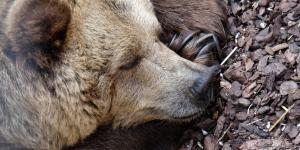
Especially as we get older, we can find remaining in one place too long to be problematic. Simply getting off the couch after a long movie can leave us stiff and awkward. In this context, it is quite amazing that some animals are able to spend months on end barely moving at all in a state of torpor. Without...

Flies, belonging to the order Diptera, are one of the most abundant and diverse groups of insects found across the globe. The life cycle of flies is marked by rapid growth and remarkable reproductive capabilities. Flies are known for their short lifespan, but their ability to reproduce quickly ensures...

The Mediterranean is a region of Europe defined by being on the coast of the Mediterranean Sea. This means it is home to many aquatic animals, as well as the terrestrial animals of inland Mediterranean countries. Seabirds are aquatic animals, although they may spend some of their time on land. They cannot...

We can accurately say the difference between predator and prey is that predators hunt prey for food. These are in reference to their respective positions within the food web. These roles are not always clearly delineated, with some predators being prey to others, depending on the circumstances. If we look...

Salps are tunicate marine animals that are characterized by their barrel-shaped and fre-floating habits. They can live singly or in extensive colonies in the pelagic zone of the world's oceans. They are gelatinous in texture and the majority of their mass is transparent, making salps almost imperceptible...

Amphipods are members of the order Amphipoda, small crustaceans that are characterized by having no carapace. They have a global distribution in the world's aquatic environments. Amphipods have been evolving and adapting into various forms of life. We are going to see that they can inhabit different ecosystems,...

Pelagic fish are a group of diverse fish species that inhabit the pelagic zone of the world's oceans. This zone is the vertical column of large bodies of water such as seas and very deep lakes which does not contain solid structures. Within the pelagic zone are different sublayers which differ in various...

The chameleon provides a particular fascination for lizard lovers, being one of the few terrestrial vertebrates which possesses the ability to chane color. Moreover, their pigment-changing behaviors are more advanced than many of the other animals which can change their skin. This is not to say all...

Shoals of fish are more than simply the collective noun for fish. They are a dynamic social group which swim together for many reasons, some of which we are yet to understand fully in marine biology. It is a behavioral phenomenon that sees a large group of fish swimming together. We can deduce some of...