
Fun facts
255 articles
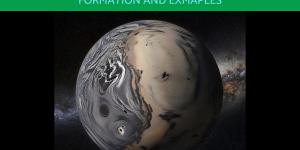
Rogue planets are celestial objects that move through space without being gravitationally bound to a star. Unlike planets orbiting the sun, these bodies travel independently through the galaxy. This means they can provide a wealth of information about the evolution and dynamics of planets in the Universe....
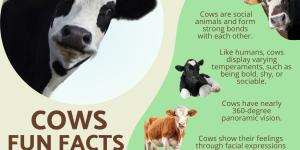
When we look at cows grazing peacefully in fields, most of us see simple farm animals. But beneath their calm exterior lies a world of surprising intelligence, complex social lives, and sensory abilities that science is only beginning to fully understand. Far from being the docile, unaware creatures they're...
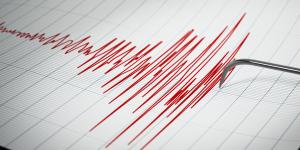
The Big One is a term used to describe a potentially catastrophic earthquake expected to strike along major fault lines, such as the San Andreas Fault. Experts warn that when it happens, it could cause widespread destruction, aftershocks, and even tsunamis. But when might The Big One hit, and how dangerous...
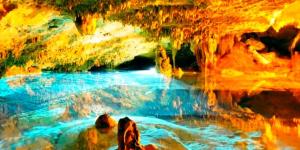
Beneath the Earth's surface lies a hidden network of subterranean rivers, quietly flowing through limestone caverns and porous rock formations. These mysterious waterways play a crucial role in the planet's hydrological cycle, influencing groundwater movement and cave formation. But what exactly are subterranean...

Early Earth was nothing like it is now. It was a fiery, molten ball, constantly hit by asteroids and comets, with volcanoes erupting everywhere. Over millions of years, it cooled down. Heavy metals sank to the center, creating Earth's core, while lighter materials formed the outer layers. Today, Earth is...
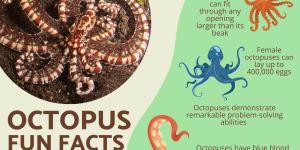
Octopuses are some of the most mysterious and intelligent creatures in the ocean. These eight-armed inhabitants of the deep are far more than just unusual-looking sea dwellers. With three hearts pumping blue blood through their bodies, a brain that extends into their limbs, and the ability to transform...

When exploring the fascinating world of geology, the terms minerals, rocks, and crystals are often confused, even though they represent distinct and essential components of Earth's structure. These natural materials play a crucial role in shaping the planet’s surface and contribute to its overall composition....

The Fata Morgana phenomenon is a type of mirage that occurs due to the refraction of light in layers of air with different temperatures. This refraction causes the distortion of objects on the horizon. It is an optical illusion which has been observed in various parts of the world. Its distortion effects...
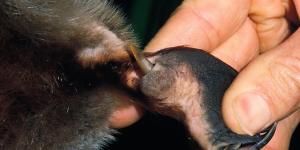
The platypus is one of nature’s most fascinating creatures, but did you know that this unique animal is also venomous? While most people associate venom with snakes and spiders, the male platypus carries a surprising defense mechanism—sharp spurs on its hind legs that can inject venom. But how dangerous is...

Most duck species can fly, although there are notable exceptions in both wild duck species and domestic duck breeds. Even among those able to fly, their ability can vary according to their needs. Not all flying ducks are migratory, so they may have less need to fly high or over long distances. Those that...
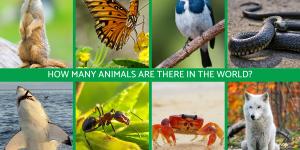
There are around 1,565,855 species of animals in the world, distributed among animal types such as mammals, birds, reptiles, amphibians, arachnids, corals, crustaceans and others. It is impossible to produce an exact number of the total animal species. This is due to both the limitations of studying animal...

Why do we have seasons? It's a question that touches everything from our weather to the way nature behaves. Despite the common belief, it's not about Earth's distance from the Sun. The real reason is our planet's 23.5-degree axial tilt. This tilt stays consistent as Earth orbits the Sun, meaning different...
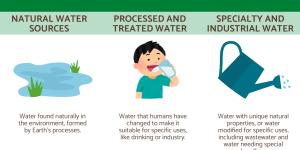
Water exists in many forms, each with unique characteristics shaped by natural processes or human intervention. While water covers much of the globe, its availability and usability vary significantly depending on its source, composition, and treatment. Understanding these variations is crucial for both...

It's easy to forget that plants are constantly exchanging gases with the air, a process far more complex than our own breathing. From the tiny pores on a leaf to the massive gas exchange of ocean algae, plant respiration is vital for all life on Earth. Plants don't have lungs like us. Instead, they've...

We all know feathers are essential for a bird's ability to fly, but their importance goes far beyond just taking to the skies. These structures, which are lightweight yet highly intricate, carry out a remarkable array of essential tasks that aid in the survival and welfare of birds through various and enchanting...

Why are snowflakes white while ice cubes are clear? It's all about how their structures interact with light. Snowflakes' complex, airy crystals have countless surfaces that scatter light in all directions (diffuse reflection), making them appear white. Ice, with its tightly packed structure, allows light...
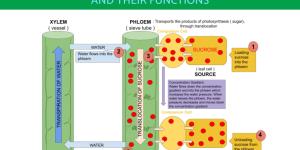
Apart from animals, plants are the only organisms which have vascular tissues. This only applies to vascular plants, since non-vascular plants have a more simple structure. In biology, tissues are a collection of cells which work together to perform a particular function, but which are less complicated...
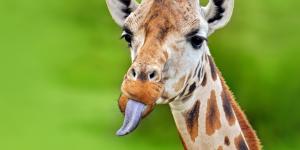
Known for their long necks, giraffes (Giraffa camelopardalis) also possess an equally amazing adaptation: their tongues. At 53 cm (20.8 inches) long and distinctively two-toned, these specialized organs are crucial for survival in the African savanna. Millions of years of evolutionary refinement are reflected...

Known scientifically as meteors, shooting stars are an astronomical phenomenon that occurs when small particles of dust and rock from interplanetary space enter the Earth's atmosphere. These particles burn up due to friction with the air as they fall at high speed, creating a bright trail of light in the sky...
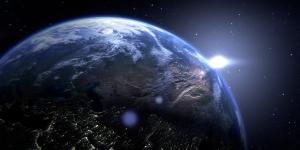
Have you ever stopped to wonder why the Earth is round? It's a fundamental fact we learn early in life, but the science behind this seemingly simple observation is quite fascinating. Our planet isn't a perfect sphere, but it's close, and the forces that shaped it into this form are powerful and universal....

Saturn, recognized for its prominent ring system, has held human interest for centuries. Early astronomers observed it with rudimentary telescopes, while modern missions like Cassini have provided detailed data, deepening our understanding of this gas giant. Today, Saturn remains a cornerstone of planetary...

The Iberian lynx (Lynx pardinus) is one of four extant lynx species from the genus Lynx. Native to the Iberian Peninsula of Spain and Portugal, the Iberian lynx is one of the few apex predators left in the region. While numbers have been decimated over the years for various reasons, there in an encouraging...
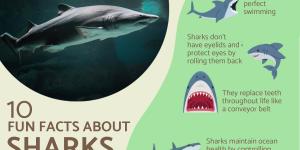
When you think of sharks, the image of a fearsome predator with rows of razor-sharp teeth might spring to mind. But these apex predators have dominated the oceans for over 400 million years, long before dinosaurs roamed the Earth. And the truth is, sharks are far more than Hollywood villains. In fact,...
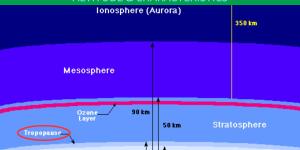
We have already explained the different levels of Earth's atmosphere at thedailyECO, but the expanse which divides our planet from the rest of our solar system is vast. This means that smaller sub-layers are often required to better understand some of the liminal areas of the atmosphere. Each layer...
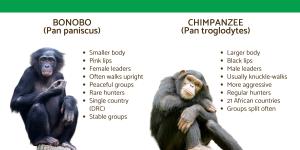
Bonobos (Pan paniscus) and chimpanzees (Pan troglodytes) are part of the same genus, Pan, and share 98.7% of their DNA. They also share over 98% of their DNA with humans. Although they split from a common ancestor about 1.7 million years ago, they have developed clear differences in their appearance,...

Knowing exactly how many rings the planet Saturn has is practically impossible. We know that Saturn has 7 main rings, but these are actually groups of smaller rings which make up each larger main ring. There are about 30 individual rings within these ring groups, but these are also made of thousands...

Dark matter and dark energy make up 95% of our universe, yet they remain among science's biggest mysteries. Though they share the word "dark" in their names, these cosmic forces work in completely opposite ways and play very different roles in shaping our universe. Let's explore what makes each one unique...

For most of us, the concept of fruit vs. vegetable is mainly a culinary distinction. Generally speaking, we go to vegetables when we want something savory and fruit when we want something sweet. However, this distinction is not accurate when it comes to categorizing fruits and vegetables. To really know the...
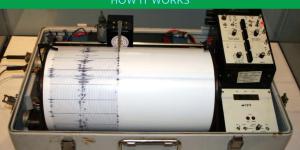
A seismograph is an instrument used to detect, measure and record ground movements caused by seismic phenomena. Such seismic phenomena include earthquakes, volcanic eruptions and even those induced by human activity such as those caused by explosions. Incorporating elements such as a seismometer and seismogram,...

Humans once believed the Sun orbited Earth. While this seems logical, we feel still while the Sun appears to move across the sky, the truth is exactly opposite. Earth moves around the Sun, a fact that completely changed our understanding of our place in space. Today, we know the Earth never sits still....

Gravity is the force of attraction exerted by bodies with mass. The planet Earth on which we live has considerable mass and the gravity it generates is responsible for keeping objects on its surface. As one of the fundamental interactions, it also influences a wide variety of natural and dynamic phenomena. Earth's...
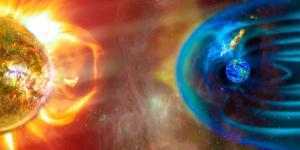
Solar wind shapes our space environment in many different ways. This continuous stream of charged particles flowing from the Sun's outer atmosphere travels millions of miles through space before encountering Earth's magnetic shield. While much of this cosmic wind goes unnoticed in our daily lives, its effects...
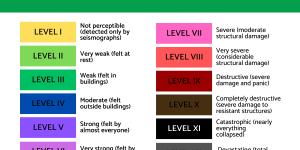
The Mercalli Intensity Scale measures earthquake effects through observable damage and human experience, using 12 levels from barely noticeable tremors to total destruction. Created in 1902 and modified in 1931, this scale helps emergency responders assess damage patterns and engineers design seismic-resistant...

The thermosphere is one of the upper layers of the Earth's atmosphere, located between the mesosphere and the exosphere. It begins approximately 50 mi (80 km) above sea level and extends to around 435 mi (700 km). It has some key functions which allow human life on Earth to continue, such as protection against...
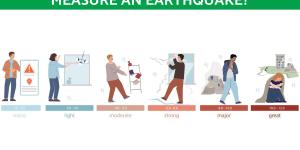
Earthquakes are geological hazards which occur due to the movement of tectonic plates in the Earth's crust. Their study requires specific tools and scales to measure their magnitude, intensity and effects. The Richter scale is a method that measures the energy released at the epicenter of an earthquake...

There are three great oceans on planet Earth: the Atlantic Ocean, the Indian Ocean, and the Pacific Ocean. These three oceans, together with the seas, occupy approximately 71% of the terrestrial territory. In this article we will focus on the Atlantic and Pacific oceans; both connected by the Strait...

Permafrost refers to ground that remains frozen for at least two consecutive years. Found primarily in polar regions and high-altitude areas, it plays a critical role in shaping ecosystems and influencing global climate. Permafrost consists of soil, rock, and organic material locked in ice. As temperatures...

The exosphere is the outermost layer of the a planet's atmosphere. On our planet, it is begins 500 310 miles from the surface of the Earth and extends gradually until it blends with outer space. Characterized by its low density and particle dispersion, this region acts as a transition zone between the...

The cryosphere refers to all areas on Earth where water exists in its frozen form, including glaciers, ice sheets, snow, sea ice, and permafrost. This frozen world plays a critical role in shaping the global climate, as it influences Earth’s temperature, sea levels, and water cycles. However, climate change...
Stars are distant objects that shine brightly in the night sky. Their light has traveled many light-years to reach us.Stars generate light through nuclear fusion in their cores. Inside these giant balls of gas, temperatures reach 15 million degrees Celsius, forcing hydrogen atoms to combine into helium. This...
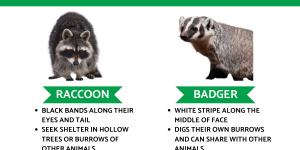
Both terrestrial mammals with similar markings, raccoons and badgers have certain differences with which we can easily distinguish them. These differences can be seen in their physical appearance, but also in factors such as habitat and behavior. For example, raccoons have black markings around their eyes,...

The ferret and the possum are different species, but they share similarities which mean some of us may confuse one for the other. They are both mammals that have slender bodies and narrowed faces. Their markings will depend on species, but they can both have dark and light patches on different parts of...

Uranus is the seventh planet away from the Sun and the closest it an ever be to our own planet Earth is 1.6 billion miles. Despite such a long distance away, you might be surprised how much astronomers are able to know about this ice giant of a planet. The information we have is not only vast, but it is...
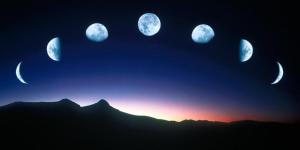
For millennia, humans have looked up at the Moon with fascination. This celestial orb has inspired countless myths, guided travelers across vast distances, and even influenced our calendars. But beyond its cultural significance, the Moon plays a surprisingly crucial role in shaping life on Earth. In...
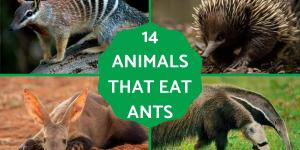
Myrmecophagous animals are those which eat ants or termites, especially if these insects constitute the majority of their diet. This can be used to contrast with insectivores which eat different kinds of insects in a more generalized way. Some insectivores may carry out myrmecophagy opportunistically,...

World Animal Day is celebrated on the 4th October every year. It is an event in honor of both the wild animals which are so essential to our global ecosystems, as well as the companion and working animals with which we share our lives. Not only is it designed to celebrate the beauty of these animals,...
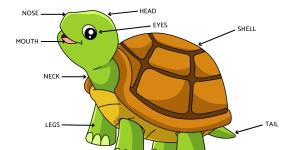
A turtle is known for its shell, from which its body emerges. Despite this hard carapace which it used for shelter and protection, the turtle anatomy include the body parts we expect from most reptiles. These include a head, legs and a tail. While all turtles will have the same basic body parts, some...

Camels and dromedaries are often confused for one another, but these two animals, while closely related, have distinct characteristics that set them apart. Both are well-adapted to harsh desert environments, yet their physical differences, habitats, and uses throughout history are unique. Understanding...

We may only think of humans and animals as having organs, but plants also need organs to carry out their various functions. For example, we know our skin has an epidermis, but you may not know that plants have the same organ. If we look closely at this epidermis, we may be able to see tiny pores. These...

Have you ever imagined a tree towering as high as a 35-story building? These natural giants do exist, although their canopies often reach above the clouds, hidden in remote and hard-to-reach places. While many trees grow to impressive heights, one stands above the rest as the tallest living being on Earth....