
Biology
158 articles

We can become complacent with the plants and animals living around us, but our planet's biodiversity is astonishing. Although they are fascinating, it is not necessary to only look at exotic ecosystems to see how flora and fauna interact. Even the most humble weed exists in careful coexistence with the other...

In biology, cells are microscopic functional units which allow organisms to carry out their various vital processes. Within each cell are different organelles, the constituent parts which allow the cells to carry out these overall functions. One of the most important organelles of most eukaryotic cells is something...

The perianth is the protective outer layer of a flower that encloses and protects the reproductive organs such as the stamens and pistils. Its functions go beyond protection, as the perianth can also attract pollinators and help identify different plant species. Therefore, understanding the structure and...

It can be helpful to look at cells as little factories. They have different departments and structures within them which carry out specific functions. Similar to a factory, these different structures within a cell work collectively to perform the overall function of the type of cell. Individually, they...

Biodiversity on our planet is distributed unevenly. We know this when we compare the scarcity of life somewhere like Antarctica with the abundance of somewhere like the Amazon rainforest. These areas have plant and animal species which are well adapted to their regions. Some of these species are only able...

Viruses and bacteria are two types of microorganisms that are important to understand for a variety of reasons, including their impact on human health and the environment. Both viruses and bacteria can be controlled and treated by a variety of methods, including vaccines, antibiotics, and antiviral drugs....

Although they may appear to be very different in form and behavior, there are great similarities between cows, giraffes, and hippopotamuses. One of the most defining is the fact they are all artiodactyls, otherwise known as even-toed ungulates. While we have used these animals as examples, there are...

Primates are a diverse group of mammals that include humans, apes, and lemurs. Due to their close genetic and behavioral similarities to humans, primates are often studied to gain insights into human evolution, behavior, and biology. Primates have played a significant role in human evolution, and studying...

Leaves are the plant organs specialized to capture light energy through photosynthesis. Leaves come in different sizes, colors, and shapes, and there are several ways to classify them. Leaf morphology describes the different ways in which plant leaves are classified. All trees have a leaf structure...

Botany is a complicated field of study which requires years of study to even get to grips with the basics. Such complication is not made any easier by the fact gardeners will often use completely different terminology for the same plant. The names they use depend on their culture, personal preference...

We should be aware that bacteria can be very harmful to individual organisms, depending on their type and rate of infection. We may be less aware of just how important different types of bacteria are for both individual organisms and the larger ecosystems in which they live. They can help in food digestion,...

The Solanaceae family, also known as the nightshade family (Solanaceae Juss.) is a family of herbaceous or woody plants that includes about 98 genera and about 2700 species, most of which are poisonous, such as deadly nightshade, which can even cause death. Only a few are edible, including potatoes,...

All plants have certain basic characteristics such as needing sunlight, water, and nutrients to develop. Despite these fundamental similarities, there is an incredible range of diversity among plant species. These differences include their habitat, texture, colors, reproduction, and many others. One of the...

All living things are made up of cells, the basic unit of life. From tiny organisms to complex animals, we all have cells that allow us to carry out basic functions. There are different ways to classify cells: according to their origin in evolution (prokaryotic and eukaryotic cells), according to their energy...

Cell division is a vital biological process which allows life on our planet to continue. Although they are made of atoms, the cell is the basic building block of living beings. It is from cellular behavior that anatomical and physiological changes occur within organisms. Like the larger organisms of which...

All living organisms are composed of cells which are responsible for their functioning of their biological processes. Although they themselves are made of atoms, cells are considered the basic building block for all life. We know about their existence thanks to microscopy, the technical field which allows...

In biology, we refer to the adaptation of living things or biological adaptation as the process by which living things develop the ability to survive in a different environment. These changes can be morphological, physiological, behavioral, and molecular in nature. In other words, adaptation can occur...

We often speak of our metabolism in very broad terms, especially in terms of our ability to gain or lose weight. In actuality, metabolism is a set of very precise processes which occur in all living organisms. This is true from the largest mammal to the smallest unicellular organism. Metabolism is the...

The origin of life has intrigued humans since the beginning of consciousness. It is no surprise that understanding these origins has been influential in various scientific disciplines. Desire to understand and the ability to do so have not always been equal and our understanding of the fundamental building blocks...

For living organisms to survive, they require various physiological processes and metabolic pathways which influence their physical forms. These processes have been adapted over millions of years of evolution thanks to their ability to pass information on from generation to generation. This information is...

The Protista kingdom is the classification of eukaryotic organisms consisting of various unicellular and multicellular microorganisms that, although they do not have much in common, are placed in the same kingdom because they do not fit into other kingdoms. Protists have very specific, distinctive characteristics...

Even if you have never heard the term, you will likely know of different xerophytic plants. Also known as xerophytes, these plants are drought resistant and can be found all over the world. Perhaps the most well known are different type of cacti, although there are many other different types of xerophytic...

You may notice there are times of the year when insects are more abundant than usual. This is seen in summer when mosquitos make themselves well known. You may not have spent much time wondering why. The availability of resources is one such reason, as is the change of weather. Many animals have adapted...

Although very different, plants are living beings which have some basic functions which are the same as animals. They need to take carry out cellular respiration and reproduce to maintain their species, as well as many other biological processes. Energy is particularly important because they would not...

When we consider plant reproduction, it is likely we first think of seeds. By submerging in various substrates, many seeds can germinate, develop roots, and produce the shoots which result in an adult plant. While a common method of propagating a species, this is not the only way plants reproduce. Especially...

One of the most important ways to understand living beings is to classify them. Since there are so many types of organism, we choose various metrics by which we can group them. Some are larger than others. For example, we make a clear distinction between plants and animals. Not all distinctions are so...

Spermatophyte plants are plants that produce and develop from seeds. They are divided into angiosperms and gymnosperms. The main difference between these two groups is that angiosperms are plants that bear flowers and fruits, while gymnosperms develop their seeds on the surface of scales or leaves....

All living beings have at least one cell. While they can differ in many ways, they are all morphological and physiological structures which have complex and specialized functions. Similar to how human beings have organs as part of their anatomy, cells have their own subunits which are used to carry...

Bracts are a part of a plant which can be quite confusing, especially in certain plant species. Often they can look like a leaf, but sometimes they look like the petals of a flower. This is because they can be of various colors, textures, shapes and sizes. While some may look like petals, they are not....
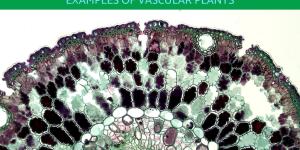
Non-vascular plants are the oldest plant species on planet Earth. It wasn't until 400 million years ago that vascular plants first developed their definitive vascular structures. Also known as tracheophytes, vascular plants have now become the dominant type of plant on our planet with around 350,000...

Every ecosystem has different food chains which helps us to understand the biocenosis of the living organisms within it. This refers to the interactions of living organisms in a given geographical area. Energy transfers between producers and consumers within the food chain, but not all are equal in...
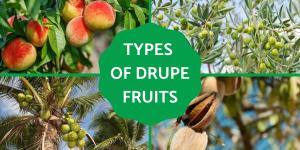
When we classify fruits, we may think of them in terms of consumption. For example, an aubergine is technically a type of fruit, but we eat it like a vegetable. Different fruits can be eaten in different ways, but botanical classification is not necessarily the same as culinary. In botany, fruits are...
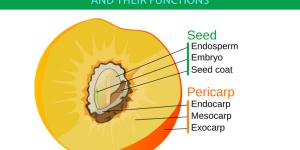
The fruit is a part of all angiosperms, commonly known as flowering plants. This is because the fruit is the mature ovary of the plant which is located in the flower and which produces seeds. Non-flowering plants do not have ovaries, so their seeds are exposed. Fruits are necessary for the reproduction...
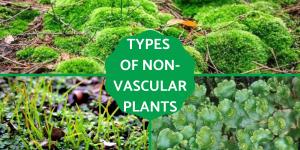
There are various ways in which plants can be classified, but all fall under the category of being either a vascular or non-vascular plant. This is an important distinction because the presence or lack of a vascular system influences the properties of the plant. Most plants which are consumed by humans...
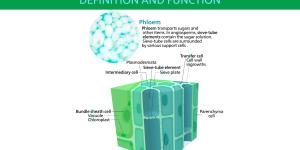
Plants have different tissues which carry out the necessary functions which allow them to grow and survive. Not all plants have the same tissues to carry out these processes. One of the most important ways to distinguish between different plants is whether they are vascular or non-vascular. Vascular plants...
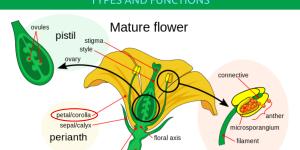
Due to their color, the petals of a plant are often the first thing we notice when looking at them. While they are a part of the flower and play a part in the plant's reproduction, they do not house any of the sexual organs themselves. This means their influence on plant reproduction is indirect. Evolutionary...
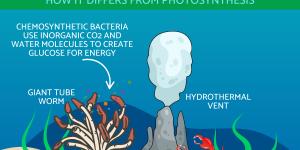
Chemosynthesis is a metabolic process in which inorganic substances are oxidized into organic matter using inorganic compounds. This process is mainly used for the organisms which carry it out or those which directly depend on them. Although it involves oxidization, it does not produce oxygen as a byproduct....

Our planet's ecosystems are composed of living organisms which exist within various biotopes, the specific geographical areas which contain them. Within these biotopes, biocenosis occurs. Biocenosis refers to how all these organisms interact with each other to maintain balance in their respective biotopes....

Relationships between individuals of the same species can be positive or negative. Competition is a negative interaction in which at least one of the competitors is harmed. When individuals of the same species compete for food, territory, reproduction or social dominance, population growth can be affected....
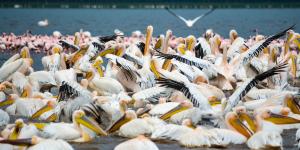
In a biological community, living beings establish various relationships. These include with many biotic and abiotic factors, such as other animal species or even the habitat itself. One of the most important biological relationship is with other members of their own species. This includes those with...
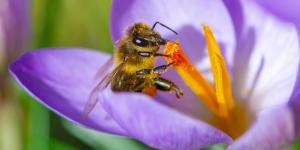
You may be aware that nectar is a substance which attracts various pollinators to flowers such as bees. You may not be aware why plants have nectar in the first place. While nectar is most associated with flowering plants, it can be found in some non-flowering plants. Angiosperms evolved from gymnosperms...
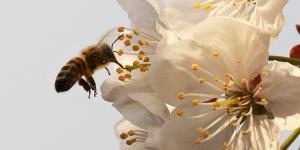
There is an enormous variety of plant species on our planet. They have evolved to adapt to various environments and ecosystems, some inhabiting the most inhospitable environments we can imagine. These adaptations affect various aspects of their life cycle, but some of the most vital affect reproduction....

Our world's ecosystems face many threats, with many scientists claiming that biodiversity loss is so great we are currently experiencing a mass extinction event. This is when the loss of biodiversity occurs at a very high rate and to a widespread degree. There are many causes of such biodiversity loss,...

Planet Earth is more than 4.5 billion years old. Life on Earth evolved from initial molecules which eventually became the living organisms we know today which can vary greatly in complexity. While various unknown events helped to form life, others worked to curtail it or at least change its course. Included...

A plasmid is a circular genetic molecule containing DNA that is found within certain cells. It is most commonly found in bacteria, although it has been found in eukaryotic organisms such as certain types of yeast. The main function of plasmids is to act as a vehicle for introducing foreign DNA or genes...
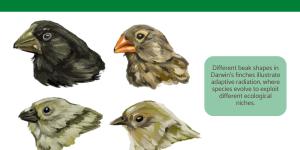
Adaptive radiation is a process in evolution where one original species quickly splits into many new ones, each finding its own way to live in different environments. This usually happens when creatures find themselves in new places with less competition, like on isolated islands or after a big die-off...
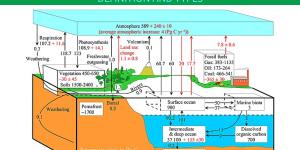
Considered cycles of matter, biogeochemical cycles are the natural routes of transformation by which essential elements and compounds move between living organisms, the atmosphere, the Earth's crust and water. These cycles are continuous and are necessary for the regulation of the nutrients essential for life...
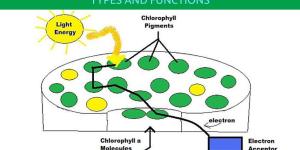
Photosynthesis is a necessary process for most life on Earth, including ourselves. Without it, ecosystems would collapse and only certain prokaryotic organisms which do not rely on it would be able to continue. Photosynthetic organisms include most plants, as well as certain types of algae and bacteria. Although...

Lysosomes are essential organelles that act as the cell’s recycling center, breaking down waste, cellular debris, and foreign invaders. These small, enzyme-filled structures play a crucial role in maintaining cell health by digesting macromolecules and recycling nutrients. Found mainly in animal cells,...

Thylakoids are membranous structures which are contained within chloroplasts and cyanobacteria. They trap light energy and transduce it into the chemical energy forms known as ATP and NADPH. Thylakoids are structures where a lumen space is surrounded by a membrane. They are mainly composed of photosystems...